


Yellow Journalism and PRGI Registration: In today’s digital age, news travels faster than ever. Newspapers, magazines, online news platforms, and social media channels compete to attract readers’ attention. Political developments, celebrity controversies, election results, crime reports, and sensational incidents frequently become popular topics. However, the desire to attract more readers can sometimes encourage misleading headlines, exaggerated stories, and unverified information. This practice is commonly associated with Yellow Journalism.
Yellow journalism refers to a style of journalism that emphasizes sensationalism, exaggeration, emotional headlines, and sometimes misleading or inadequately verified information to attract public attention. It prioritizes readership, publicity, or commercial gain over accuracy and responsible reporting.
For aspiring publishers, journalists, and media entrepreneurs in India, understanding yellow journalism is important when planning to establish a newspaper or magazine. A publication can attract readers and generate revenue without sacrificing truth, credibility, or editorial independence.
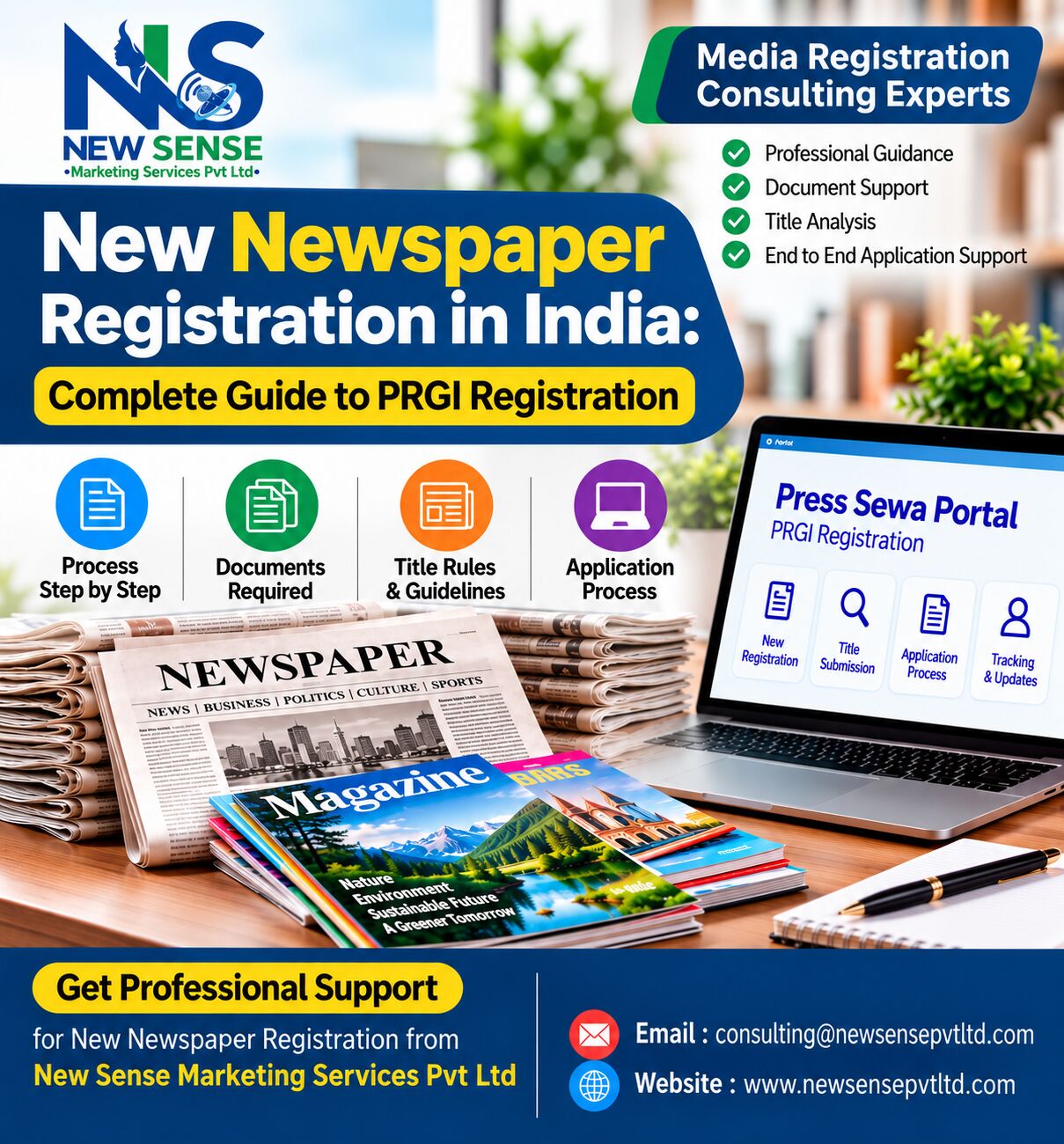
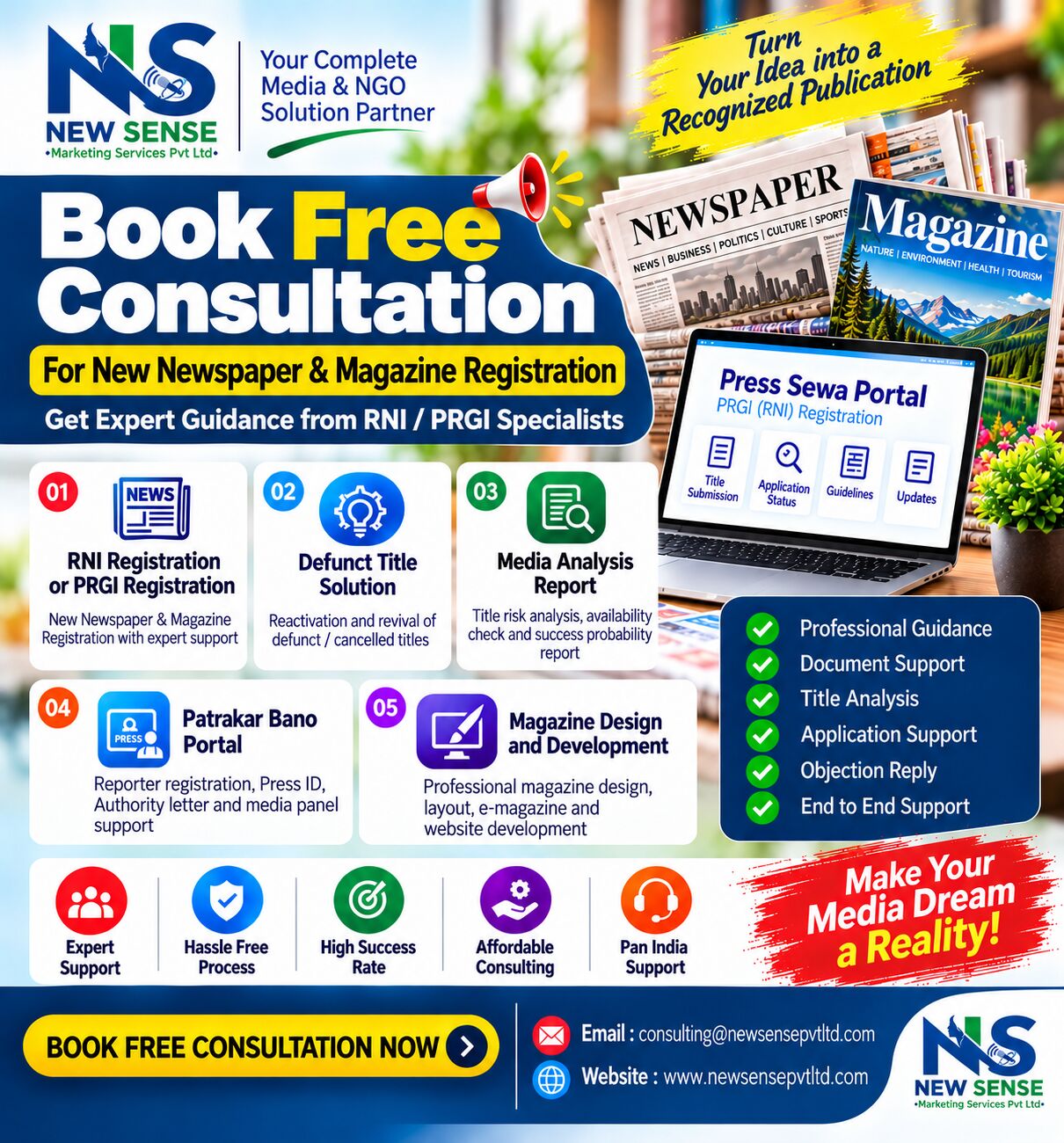
If you want to launch your own newspaper or magazine, you should understand the applicable registration requirements. The term RNI Registration remains widely used in online searches, while the relevant authority for newspaper and periodical registration is now the Press Registrar General of India (PRGI) under the Press and Registration of Periodicals Act, 2023, and applicable rules.
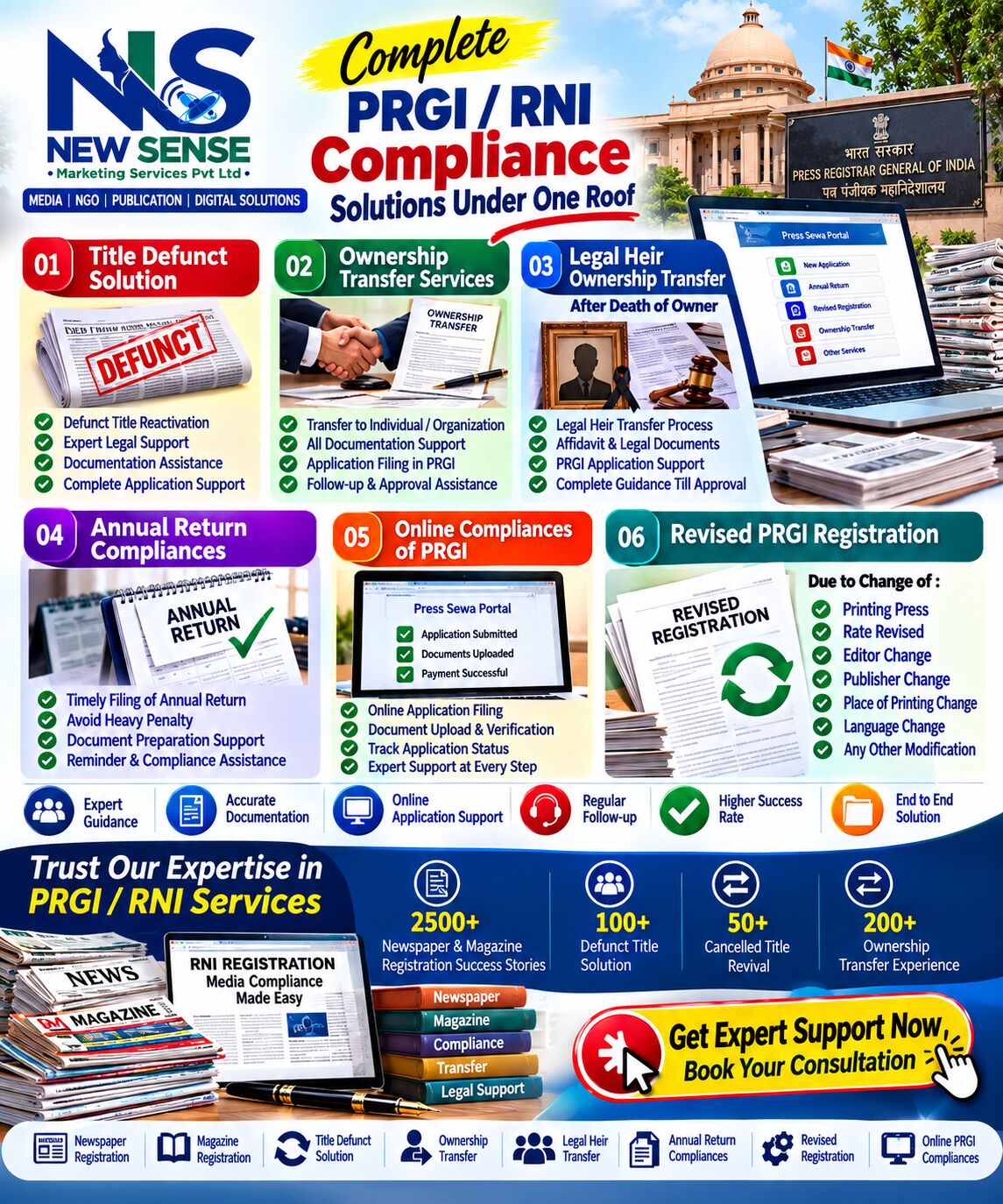
New Sense Marketing Services Pvt. Ltd. offers consulting and application-support services to help aspiring publishers understand the registration process, review proposed publication titles, prepare relevant application information, and navigate procedural requirements.
This article explains the meaning of yellow journalism, its advantages and disadvantages as a subject of media study, the risks of sensational reporting, the importance of responsible journalism, and how publishers can pursue newspaper or magazine registration with professional consulting support.
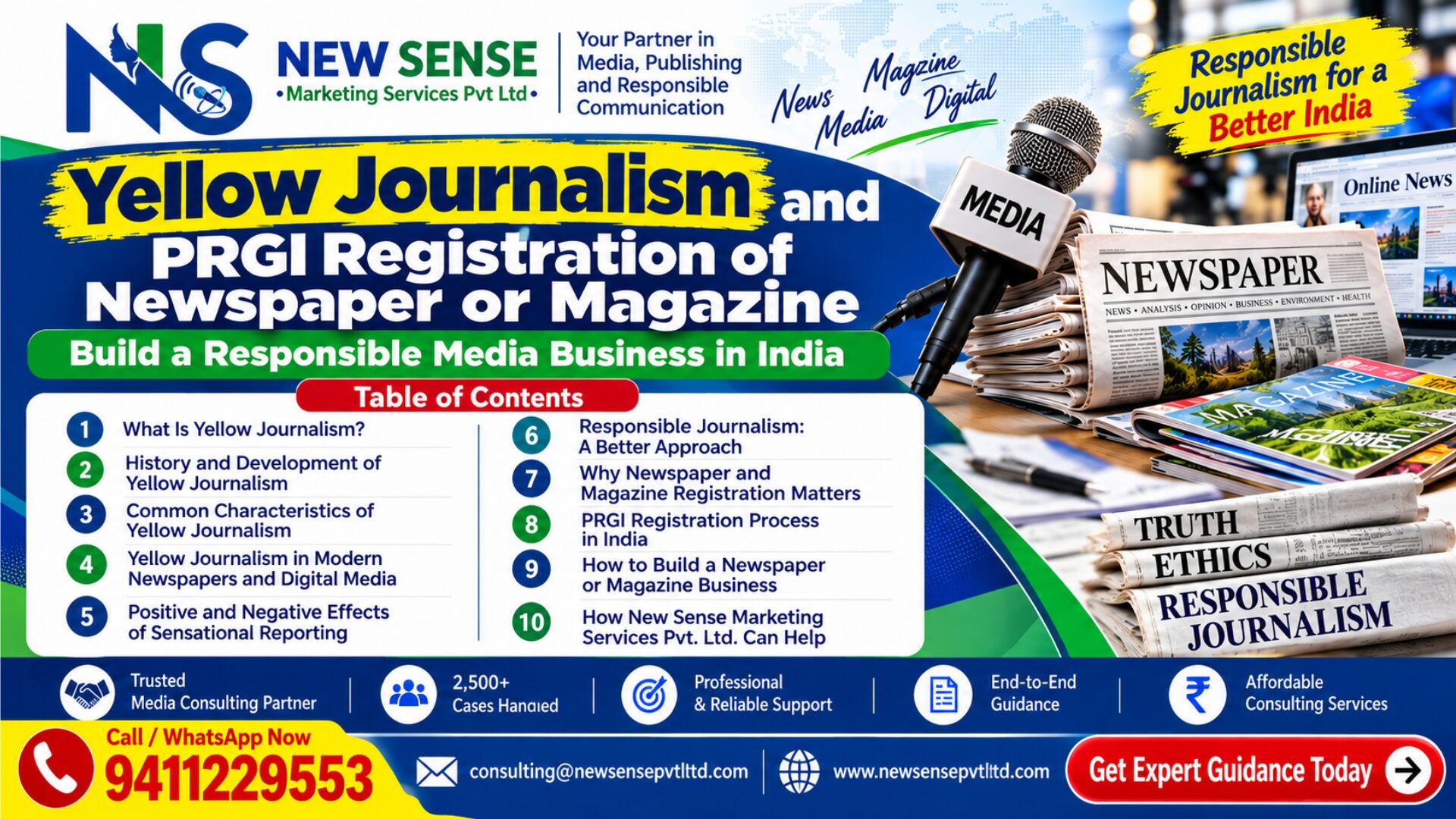
Table of Contents
- What Is Yellow Journalism?
- History and Development of Yellow Journalism
- Common Characteristics of Yellow Journalism
- Yellow Journalism in Modern Newspapers and Digital Media
- Positive and Negative Effects of Sensational Reporting
- Responsible Journalism: A Better Approach
- Why Newspaper and Magazine Registration Matters
- PRGI Registration Process in India
- How to Build a Newspaper or Magazine Business
- How New Sense Marketing Services Pvt. Ltd. Can Help
- Common Registration Mistakes to Avoid
- SEO Keywords for Yellow Journalism
- Frequently Asked Questions
- Conclusion
- Disclaimer
1. What Is Yellow Journalism?
Yellow journalism is a reporting style that uses sensational headlines, dramatic presentation, exaggerated claims, or misleading information to attract attention and increase readership.
The term is associated with the intense newspaper competition of the late nineteenth century in the United States. Publishers sometimes used dramatic stories, striking illustrations, and emotionally charged reporting to compete for circulation.
Although sensational presentation is not automatically dishonest, journalism becomes problematic when it sacrifices accuracy, context, fairness, or verification for attention.
Examples of Yellow Journalism
Common examples include:
- Publishing a dramatic headline that exaggerates what the article actually establishes.
- Presenting an unverified allegation as a confirmed fact.
- Publishing rumours about political leaders without reliable evidence.
- Using misleading photographs or images unrelated to the reported incident.
- Reporting crime stories in a way that creates unnecessary panic.
- Omitting important context to make an ordinary event appear extraordinary.
- Publishing an incorrect election result to attract immediate traffic.
For example, a responsible headline might say, “Officials Investigate Allegations of Irregularities in Local Election.” A misleading version might declare, “Election Completely Stolen!” before any reliable evidence or official finding establishes such a claim.
The second headline may attract attention, but it can also mislead readers and damage public trust.
2. History and Development of Yellow Journalism
The expression yellow journalism is historically associated with fierce competition between major American newspapers during the 1890s. Publishers William Randolph Hearst and Joseph Pulitzer became associated with this era of circulation competition and sensational reporting.
The term is often linked to the Yellow Kid comic-strip character, which appeared in newspapers competing for readership.
Over time, yellow journalism became a broader term for reporting that prioritizes sensationalism over reliable information.
Yellow Journalism in the Digital Era
The media environment has changed considerably. Newspapers and magazines now compete with websites, online news portals, video platforms, and social networks.
The pressure to attract clicks, views, and shares can encourage some publishers to use exaggerated headlines or publish information before verifying it.
Examples include sensational thumbnails, misleading breaking-news banners, fabricated quotations, and viral claims presented without evidence.
However, popular news, investigative journalism, strong headlines, and exclusive reporting are not automatically yellow journalism. The critical distinction is whether the publication presents information accurately, fairly, and with sufficient verification.
3. Common Characteristics of Yellow Journalism
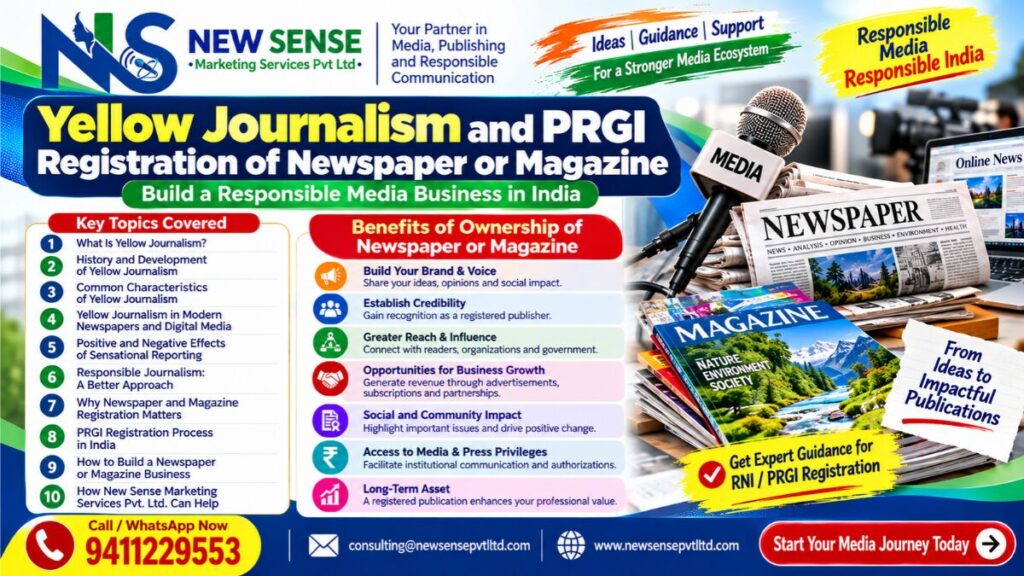
Understanding the characteristics of yellow journalism can help publishers improve their editorial standards.
| Characteristic | What it means | Better journalistic practice |
| Sensational headlines | Dramatic wording designed to provoke a reaction | Use accurate, engaging headlines |
| Unverified claims | Information published without sufficient checking | Verify facts and consult reliable sources |
| Exaggerated reporting | Events are presented as more serious or dramatic than the evidence supports | Provide context and proportion |
| Misleading images | Photographs are presented in a deceptive or unrelated context | Verify image sources and captions |
| One-sided coverage | Relevant perspectives or responses are omitted | Seek appropriate viewpoints and responses |
| Emotional manipulation | Fear, anger, or outrage is used to influence readers | Separate facts from opinion |
| Clickbait | A headline promises more than the article delivers | Ensure headlines accurately reflect the story |
These practices are relevant to print publishers as well as digital media businesses. A registered newspaper or magazine should develop an editorial process that encourages accuracy and accountability.
4. Yellow Journalism in Modern Newspapers and Digital Media
The competition for attention can affect every form of media, including newspapers, magazines, news websites, and social media accounts.
Political controversies, elections, crime, entertainment, and celebrity news can attract substantial public interest. Nevertheless, high public interest does not justify publishing unverified claims.
Political and Election Reporting
Election reporting requires particular care because inaccurate information may influence public understanding and damage the reputations of candidates or political organizations.
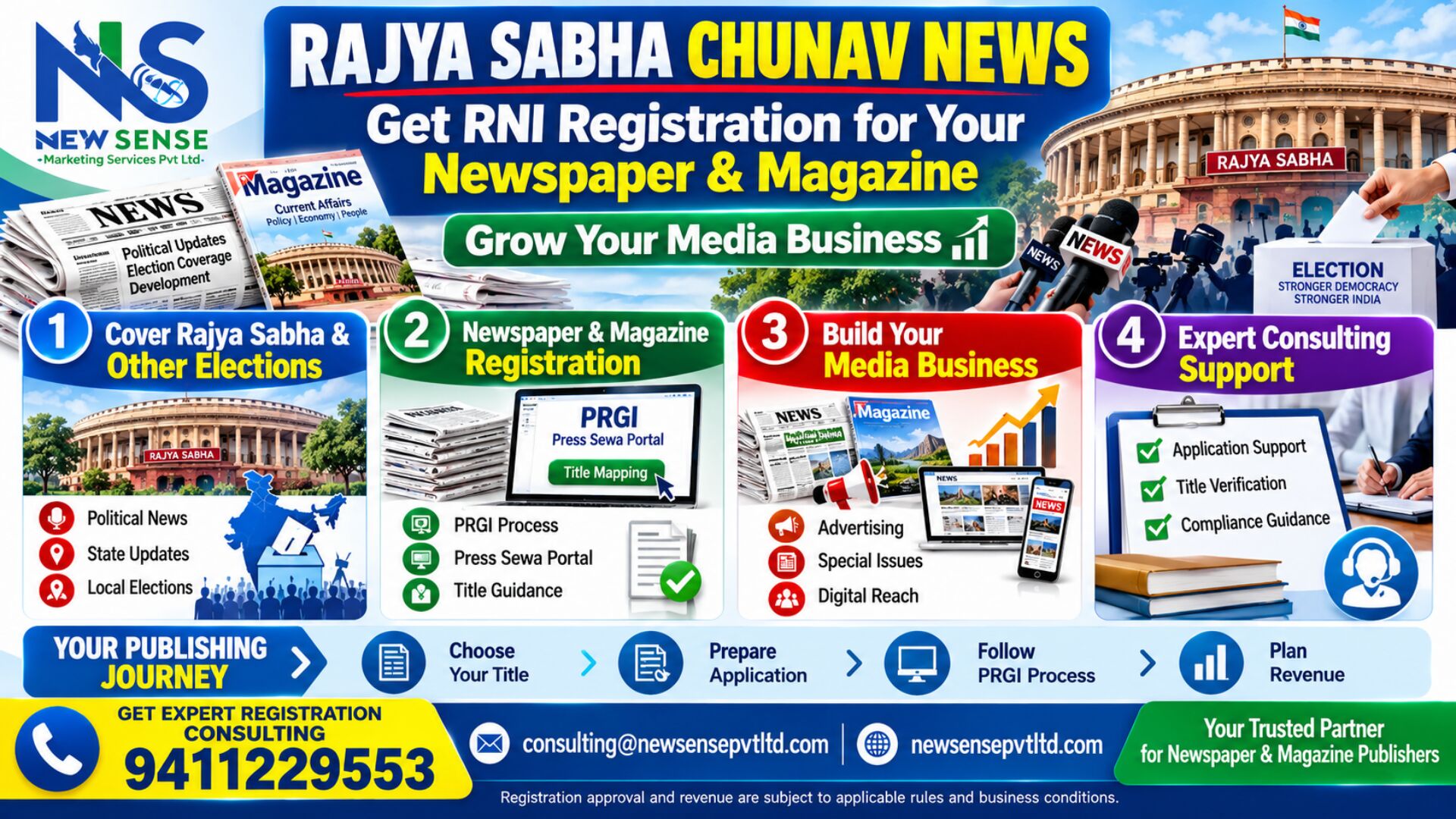
Publishers covering Lok Sabha elections, Vidhan Sabha elections, Rajya Sabha developments, municipal elections, or Panchayat elections should verify dates, candidate information, official statements, and results before publication.
Crime and Public Safety Reporting
Crime stories often generate emotional responses. Journalists should distinguish allegations from established facts, avoid declaring someone guilty before a competent court has determined guilt, and respect applicable privacy and reporting restrictions.
Digital Headlines and Social Media
Short headlines and video thumbnails can simplify complicated stories, but they should not distort their meaning. Publishers should ensure that promotional content accurately represents the underlying report.
Investigative Journalism Is Different
Investigative journalism involves examining evidence, identifying wrongdoing, and holding institutions accountable. It may reveal serious misconduct and attract considerable public attention.
When based on reliable evidence, fair procedures, and responsible reporting, investigative journalism is not yellow journalism simply because its findings are controversial.
5. Positive and Negative Effects of Sensational Reporting
Sensational presentation can attract attention, but misleading journalism creates serious risks for publishers and readers.
Possible commercial attraction
Dramatic headlines may attract initial attention, and compelling storytelling can help readers discover important issues. However, this does not mean publishers must distort facts to grow their audience.
A well-written headline can be interesting without being misleading. Investigative stories, human-interest reports, and public-interest journalism can all attract readers when they provide genuine value.
Negative consequences
Loss of reader trust: Readers may stop relying on a publication that repeatedly publishes inaccurate stories.
Reputational damage: Advertisers, contributors, and other stakeholders may hesitate to associate with a publication known for misleading reports.
Legal exposure: False allegations, defamatory content, unlawful publication of personal information, and other violations can create legal consequences depending on the circumstances.
Public confusion: Incorrect information about elections, public health, crime, or government decisions may mislead readers.
Long-term business problems: Short-term attention does not necessarily produce loyal subscribers, reliable advertisers, or a sustainable media business.
For publishers, the stronger long-term strategy is to combine engaging presentation with accurate reporting and transparent corrections.
6. Responsible Journalism: A Better Approach
A newspaper or magazine can be commercially successful while maintaining high editorial standards.
Verify information before publication
Use reliable documents, official statements, credible sources, and appropriate independent confirmation. Where facts remain uncertain, clearly communicate that uncertainty.
Write clear and accurate headlines
A headline should summarize the main point of the article without inventing facts or exaggerating the evidence.
Provide context
Readers need to understand what happened, what is known, what remains uncertain, and why the event matters.
Distinguish news from opinion
Opinion pieces can offer analysis and interpretation, but readers should be able to distinguish commentary from factual reporting.
Correct errors transparently
When a material error is discovered, correct it promptly and transparently according to the publication’s editorial policy.
Protect editorial independence
Sponsored articles, advertisements, and paid promotional content should be clearly identified where required. Commercial relationships should not mislead readers about the nature of the content.
Responsible journalism helps build a recognizable publication brand and supports long-term reader relationships.
7. Why Newspaper and Magazine Registration Matters
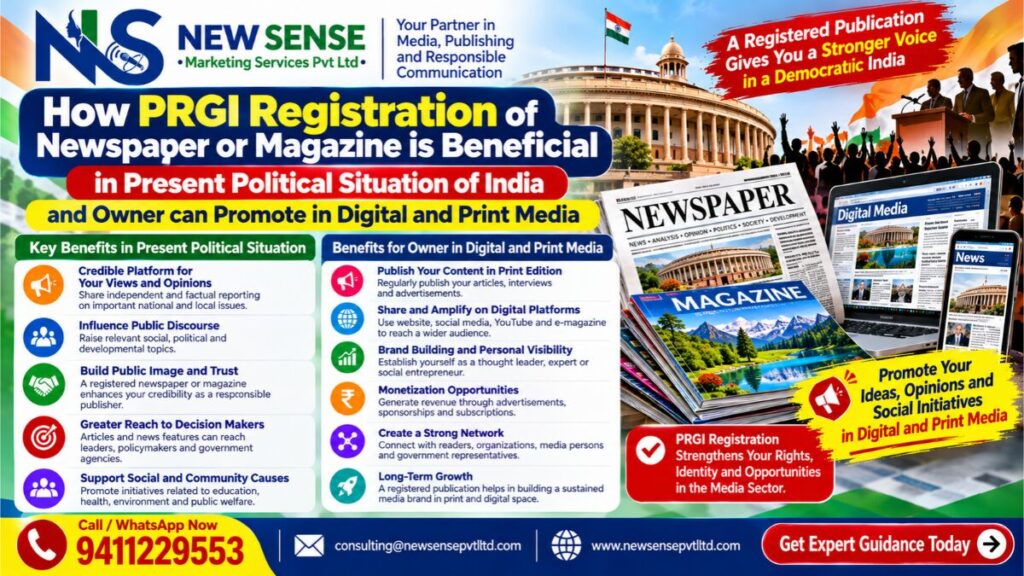
For aspiring publishers in India, registration is an important consideration when establishing a newspaper or qualifying periodical.
The term RNI Registration is still widely used by applicants and in search queries. For current registration procedures, publishers should refer to the Press Registrar General of India and the applicable legal framework.
Registering a publication does not make misleading journalism acceptable. Likewise, registration does not automatically establish that every article published by the newspaper is accurate or that the publication has government accreditation for every purpose.
Benefits of a properly planned publication
- Establish a defined publication identity.
- Plan the newspaper’s language and periodicity.
- Organize ownership and publishing information.
- Develop a consistent editorial policy.
- Explore lawful advertising and circulation opportunities.
- Understand applicable registration and compliance obligations.
- Build a long-term publishing and distribution strategy.
Publishers should verify the legal requirements applicable to their proposed publication before investing in printing, design, marketing, or distribution.
8. PRGI Registration Process in India
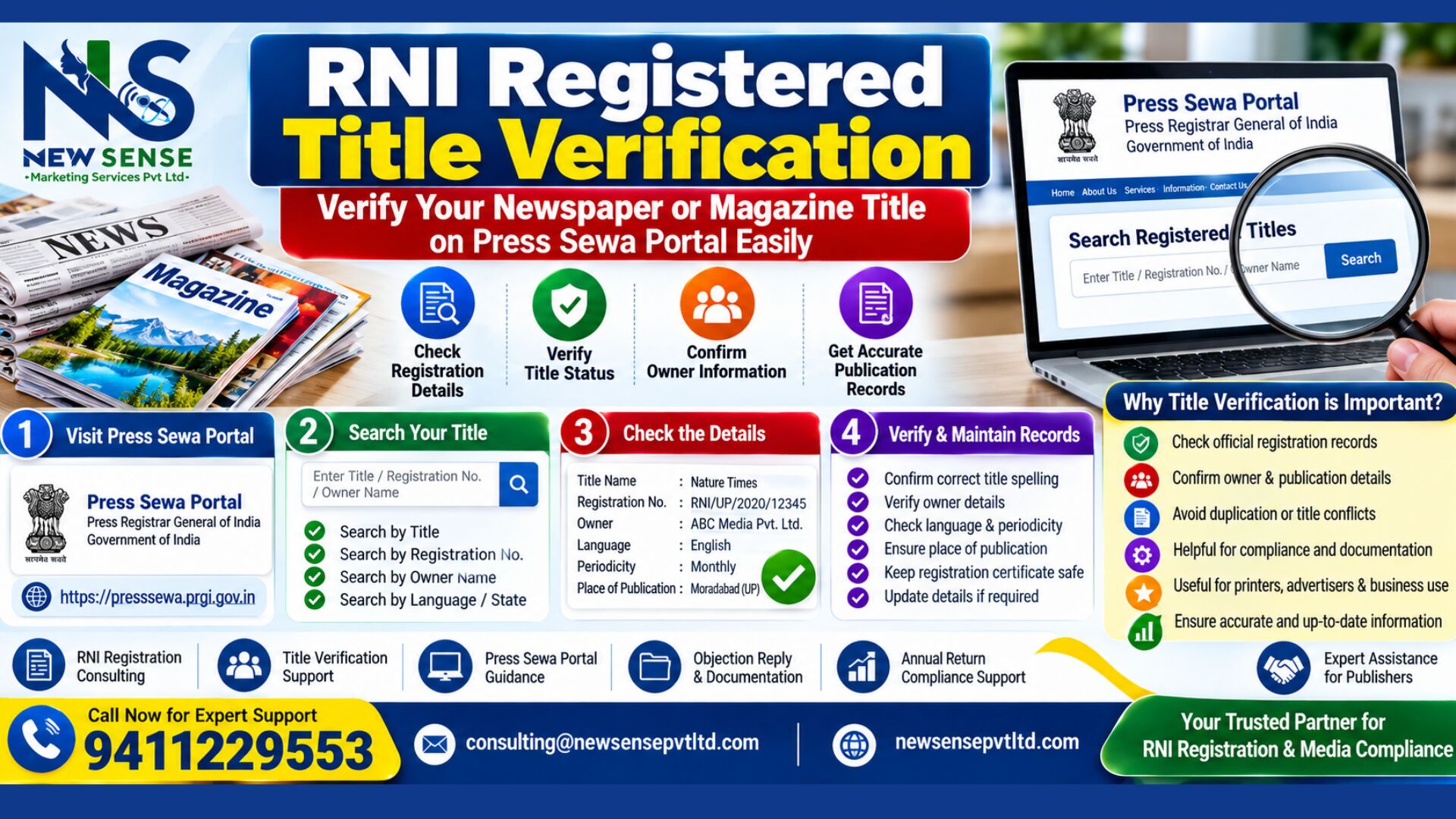
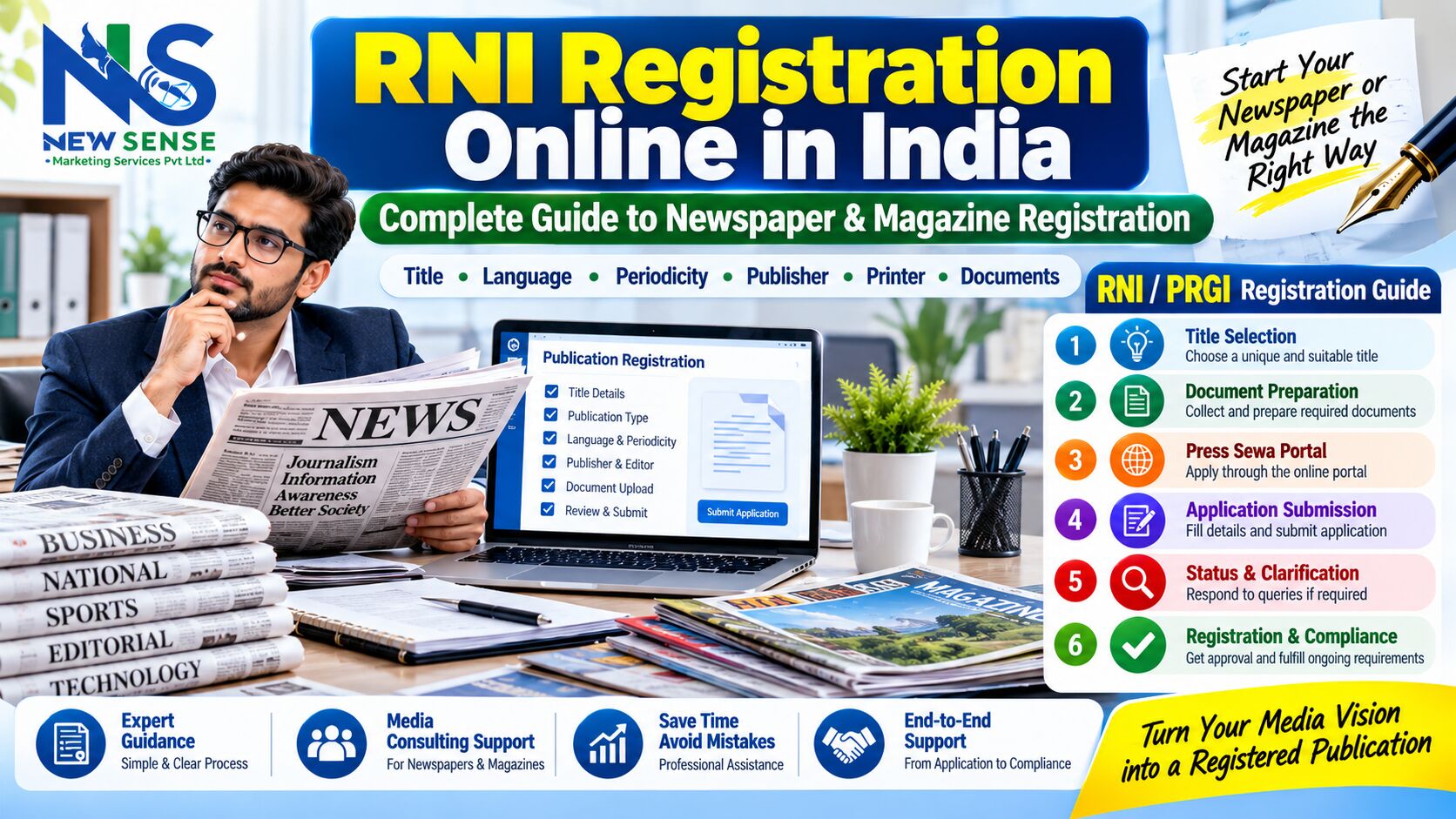
The current registration process should be followed through the official PRGI system and Press Sewa Portal.
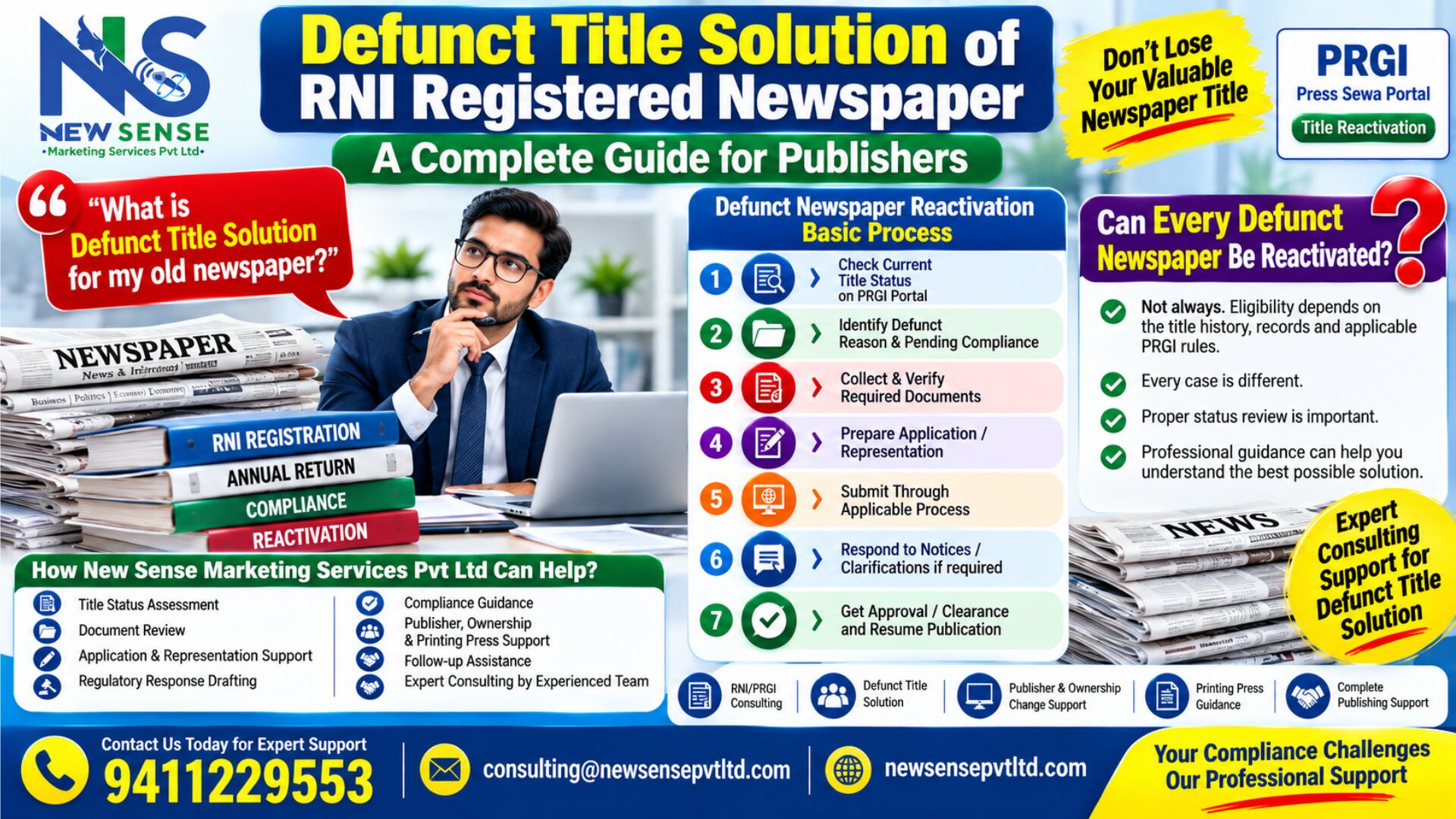
Step 1: Plan your newspaper or magazine
Decide the proposed publication type, title, language, periodicity, and place of publication. Develop an editorial focus that reflects what you genuinely intend to publish.
Step 2: Review the proposed title
Check the proposed title against the applicable official criteria and relevant existing records. A preliminary review may identify potential issues, but it does not guarantee approval.
Step 3: Prepare publication information
Organize the required details concerning ownership, publisher, editor, printer, printing press, and other relevant information, as applicable.
Step 4: Review current application requirements
Consult the latest instructions, declarations, supporting-document requirements, fees, and procedural rules.
Step 5: Complete the official application process
Follow the applicable online process and ensure that submitted information is accurate and consistent.
Step 6: Address queries or objections
If the authority raises an objection or query, review the issue and respond through the prescribed procedure, where available.
Step 7: Follow applicable compliance obligations
After registration, understand the relevant requirements concerning publication, printing, annual returns, and other obligations applicable to your case.
Requirements may change, so applicants should confirm current procedures directly through official sources.
9. How to Build a Newspaper or Magazine Business
A successful media business needs more than registration. It requires a clear editorial plan, an understanding of its audience, consistent publication, and realistic financial planning.
Select your editorial niche
Your newspaper or magazine might focus on politics, education, agriculture, business, local governance, the environment, entertainment, or general news.
Define your target audience
Identify the readers you intend to serve and the information they need. A regional publication may emphasize district-level reporting, while a magazine may focus on specialized analysis and features.
Develop a content calendar
Plan regular news reports, interviews, explanatory articles, and special features. Maintain a process for checking facts before publication.
Explore revenue opportunities
Publishers may consider print advertising, subscriptions, circulation, sponsored special issues, eligible digital advertising, events, and relevant digital products.
Protect your publication’s reputation
A credible publication can develop stronger reader relationships by providing accurate information, transparent corrections, and clearly identified advertising.
Registration does not guarantee advertising income, readership, or profitability. A realistic business plan should account for printing, distribution, staffing, technology, promotion, and compliance costs.
10. How New Sense Marketing Services Pvt. Ltd. Can Help
New Sense Marketing Services Pvt. Ltd. offers consulting and application-support services for aspiring newspaper publishers, magazine owners, and media entrepreneurs.
If you want to establish a publication that reports on politics, public affairs, social issues, or other subjects, the company can be approached for assistance in understanding the relevant registration procedures.
10.1 Newspaper Registration Consulting
The company can help applicants understand the applicable newspaper registration process, prepare relevant publication information, and organize their preparations before submission.
10.2 Magazine Registration Consulting
Aspiring magazine publishers can seek guidance on the applicable registration requirements, proposed publication details, and procedural steps.
10.3 Proposed Title Verification Guidance
A suitable title is an important part of a publication’s identity. Consulting support can help applicants review potential title-related issues and understand relevant official criteria.
Preliminary checks are not official approval, and the final decision rests with PRGI.
10.4 Online Application Support
Applicants who are unfamiliar with the Press Sewa Portal may seek assistance in understanding the online procedure and reviewing relevant application information.
Applicants remain responsible for the accuracy and truthfulness of all declarations and submissions.
10.5 Objection Reply and Query Assistance
Where an official query or objection arises, the company can be approached for assistance in understanding the issue and preparing a response based on the facts and applicable procedure.
The outcome remains subject to the competent authority’s decision.
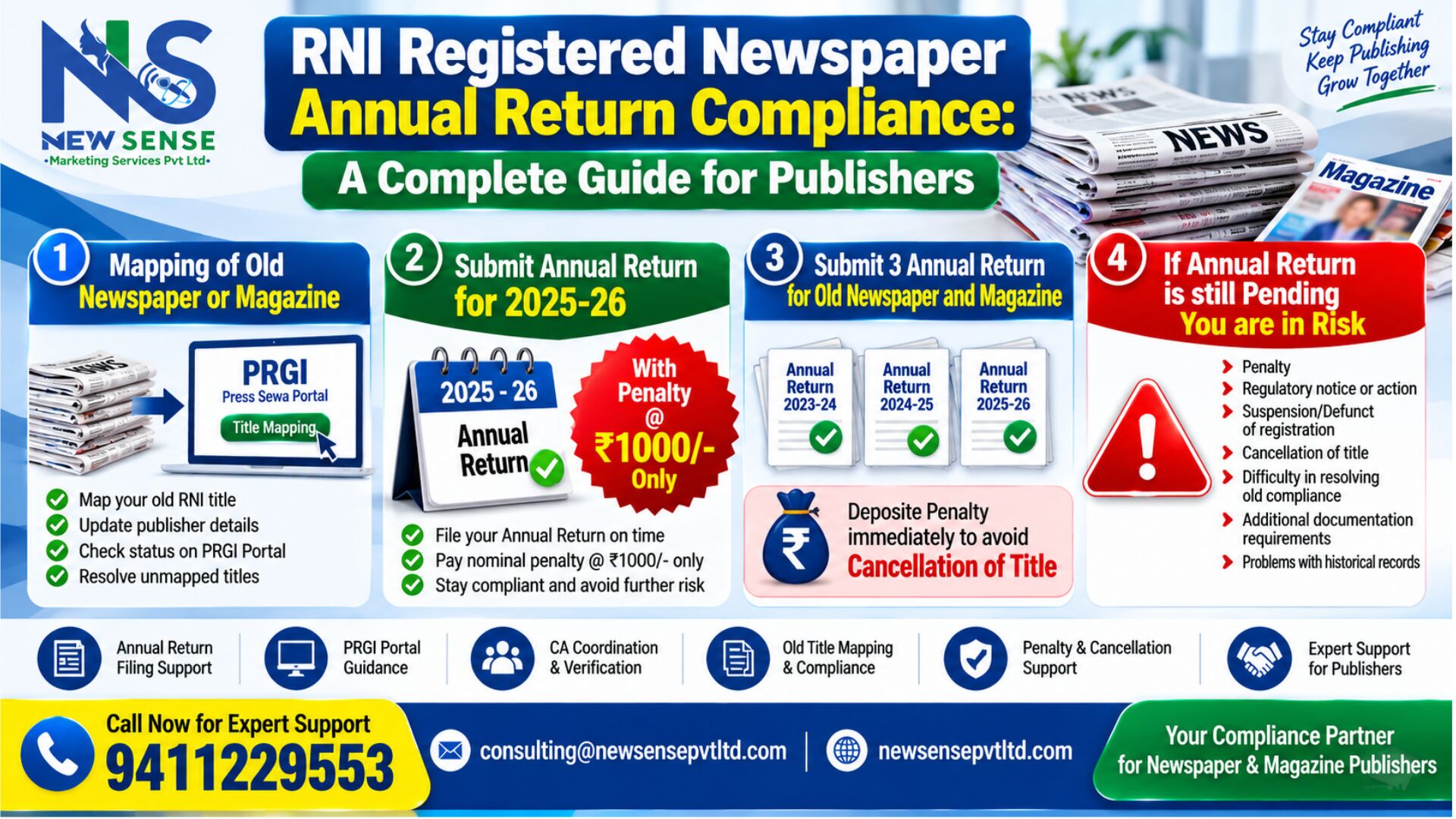
10.6 Annual Return and Compliance Guidance
Publishers should understand their applicable post-registration obligations. The company can be approached for consulting support relating to annual returns and other relevant compliance procedures.
Current requirements and deadlines should be verified through official notices.
10.7 Website Development and Magazine Design
Depending on the services currently offered and the selected package, the company can also be approached for website development and magazine design and development.
These services can help publishers establish a professional presentation for their content and develop their broader publishing strategy.
Why choose professional consulting?
Professional consulting can help applicants organize information, understand procedural requirements, identify potential errors, and prepare more systematically for the registration process.
New Sense Marketing Services Pvt. Ltd. can support the administrative and consulting aspects of setting up a publication. However, consulting services do not guarantee approval, accreditation, readership, advertising contracts, or business success.
Important distinction: Registration consulting is separate from editorial training and journalistic ethics. Publishers should independently establish editorial policies that prohibit fabricated stories, misleading headlines, and unverified allegations.
11. Common Registration and Publishing Mistakes to Avoid
Choosing a title without preliminary checks
Review the proposed title against the applicable criteria before proceeding with an application.
Providing inconsistent information
Ensure that relevant names, addresses, ownership details, and declarations are accurate and consistent.
Ignoring official requirements
Use the latest PRGI instructions instead of relying solely on old articles or informal advice.
Assuming registration guarantees revenue
Registration does not guarantee advertising contracts, reader traffic, or commercial success.
Confusing sensationalism with quality journalism
A publication can use engaging headlines and compelling storytelling without exaggerating facts or misleading readers.
Publishing unverified information
Establish a verification process for political statements, crime reports, election information, and other sensitive news.
Neglecting compliance after registration
Understand the obligations applicable to your publication and maintain records of relevant submissions and deadlines.
12. Frequently Asked Questions
FAQ 1. What is Yellow Journalism?
Yellow journalism is a style of reporting that relies on sensationalism, exaggeration, or misleading presentation to attract attention, sometimes at the expense of accuracy and fairness.
FAQ 2. Is Yellow Journalism legal in India?
The expression itself describes a style of journalism rather than a single legal offence. However, particular acts associated with misleading reporting may violate applicable laws, depending on the facts. Publishers should seek qualified legal advice when necessary.
FAQ 3. What is the difference between Yellow Journalism and responsible journalism?
Yellow journalism prioritizes sensational presentation over reliable information, while responsible journalism emphasizes verification, fairness, context, accuracy, and accountability.
FAQ 4. What is RNI Registration?
RNI Registration is a widely used term for newspaper and periodical registration in India. The relevant authority is now the Press Registrar General of India (PRGI), under the applicable legal framework.
FAQ 5. Can I register a newspaper or magazine through PRGI?
Applicants should review the current eligibility requirements and complete the applicable process through the official Press Sewa Portal. Requirements depend on the publication and the applicant’s circumstances.
FAQ 6. Does newspaper registration permit me to publish any kind of news?
No. Registration does not exempt publishers from applicable laws or make fabricated, defamatory, misleading, or otherwise unlawful content acceptable.
FAQ 7. How can New Sense Marketing Services Pvt. Ltd. help with newspaper registration?
The company offers consulting and application-support services intended to help applicants understand registration procedures, organize publication information, and prepare for the official process.
FAQ 8. Does the company provide magazine registration consulting?
Aspiring magazine publishers can approach New Sense Marketing Services Pvt. Ltd. to enquire about its magazine registration consulting, current service scope, fees, and application-support arrangements.
FAQ 9. Can New Sense Marketing Services Pvt. Ltd. help with title verification?
The company can be approached for preliminary title-verification guidance. Such guidance cannot guarantee official title approval, which remains subject to the competent authority’s decision.
FAQ 10. Can the company help with objections or application queries?
Applicants can enquire about assistance in understanding official queries or objections and preparing responses based on the relevant facts and procedures. Acceptance is determined by the competent authority.
FAQ 11. Does New Sense Marketing Services Pvt. Ltd. provide annual-return compliance support?
The company can be approached for consulting assistance concerning applicable annual-return and related compliance procedures. Publishers should confirm the current service scope and verify official deadlines.
FAQ 12. Can a registered newspaper generate advertising revenue?
A newspaper may generate revenue through advertising, circulation, subscriptions, sponsorships, and other lawful activities. Income depends on readership, advertiser demand, operating costs, and business performance.
FAQ 13. Can a newspaper use sensational headlines to attract readers?
Headlines can be engaging and dramatic when they accurately represent the underlying report. Misleading headlines and unsupported claims can damage credibility and create legal risks.
FAQ 14. Does PRGI registration guarantee government accreditation?
No. Registration and accreditation are separate matters. Accreditation may involve different eligibility criteria and procedures.
FAQ 15. Can a consultant guarantee PRGI registration approval?
No private consultant can guarantee an official decision. Consulting may help applicants prepare and identify potential errors, but approval rests with the competent authority.
FAQ 16. Where can I check the official registration process?
Visit the PRGI website at https://prgi.gov.in/ or the Press Sewa Portal at https://presssewa.prgi.gov.in/#/ for current instructions and procedures.
14. Conclusion: Responsible Journalism and Professional Registration Go Together
Yellow journalism remains an important topic for anyone planning to work in the newspaper, magazine, or wider media industry. Sensational headlines and dramatic presentation may attract immediate attention, but misleading reporting can damage public trust and undermine a publication’s long-term reputation.
A better strategy is to combine compelling storytelling with verified facts, clear headlines, balanced reporting, and transparent editorial practices.
If you want to establish your own newspaper or magazine in India, begin by understanding the applicable PRGI registration process, reviewing your proposed publication title, preparing accurate application information, and developing a realistic publishing plan.
New Sense Marketing Services Pvt. Ltd. can be approached for newspaper and magazine registration consulting, title-verification guidance, application support, annual-return compliance guidance, website development, and magazine design and development services, subject to the company’s current service offerings.
Build your media business on a strong foundation of professional preparation, legal compliance, and responsible journalism.
Contact New Sense Marketing Services Pvt. Ltd. through its verified official business website or published contact details to discuss your publication registration requirements.
15. Disclaimer
This article is intended for general informational and promotional purposes only. It does not constitute legal advice, and the discussion of yellow journalism is not an endorsement of misleading or fabricated reporting.
Registration procedures, eligibility criteria, fees, and compliance requirements may change. Applicants should verify current information through PRGI and the official Press Sewa Portal.
New Sense Marketing Services Pvt. Ltd. is a private consulting service provider, not the government registration authority. Its consulting services cannot guarantee title approval, newspaper or magazine registration, government accreditation, advertising revenue, readership, or commercial success. All final registration decisions are made by the competent authority under applicable rules.
New Sense Marketing Services Pvt Ltd
Your Vision | Our Support | Shared Success
📞 Call / WhatsApp: 9411229553
📧 Email: consulting@newsensepvtltd.com
🌐 Website: https://newsensepvtltd.com
Our Magazine: https://prakritidarshan.com/
Our Newspaper: https://prakritidarshannews.com/
Our International Journal (ISSN): https://prakritidarshanjournal.com/index.php/pdijemds/index
RNI Registration, PRGI Registration, Newspaper Registration in India, Magazine Registration, Responsible Journalism, Newspaper Publishing Business, Yellow Journalism in India, New Sense Marketing Services Pvt. Ltd.