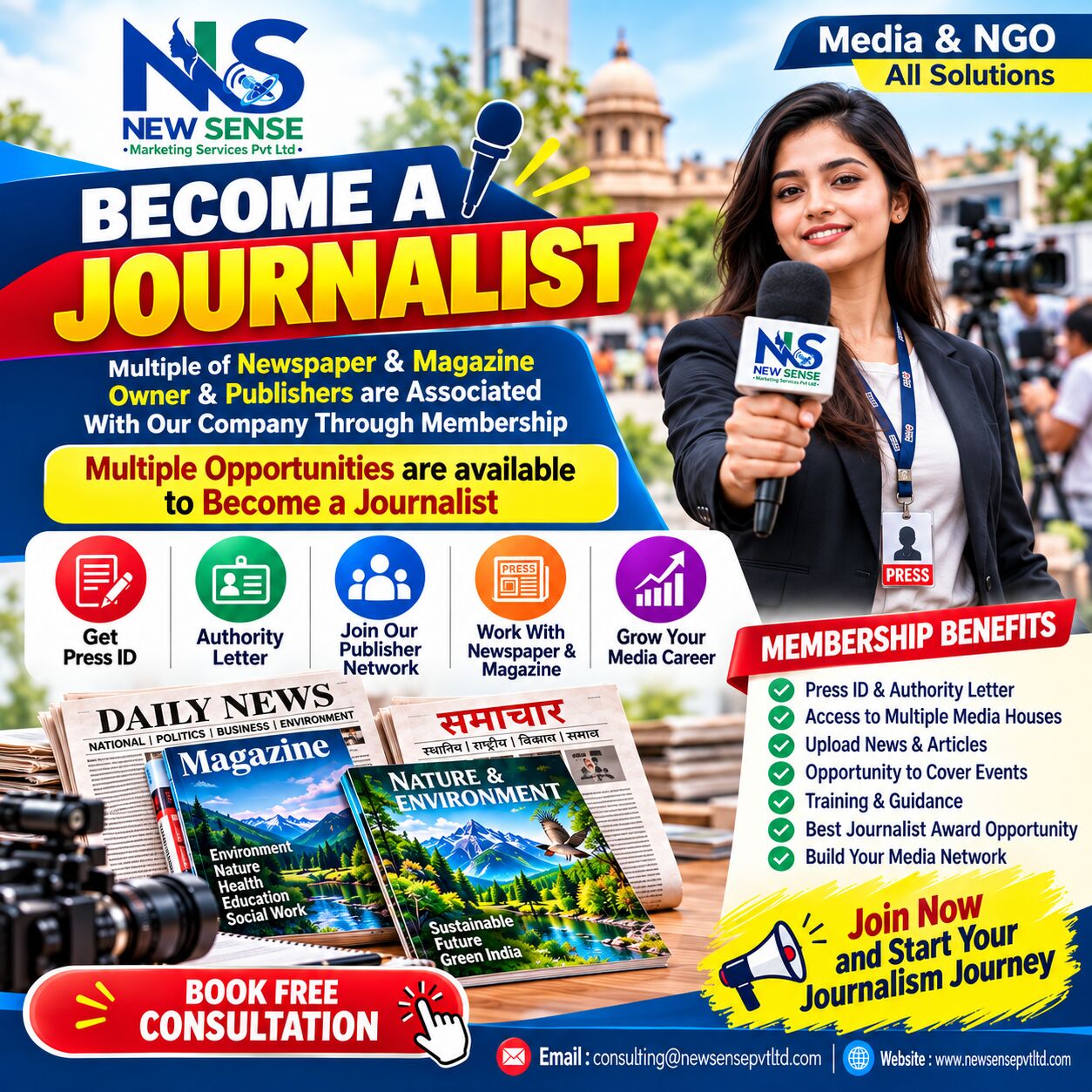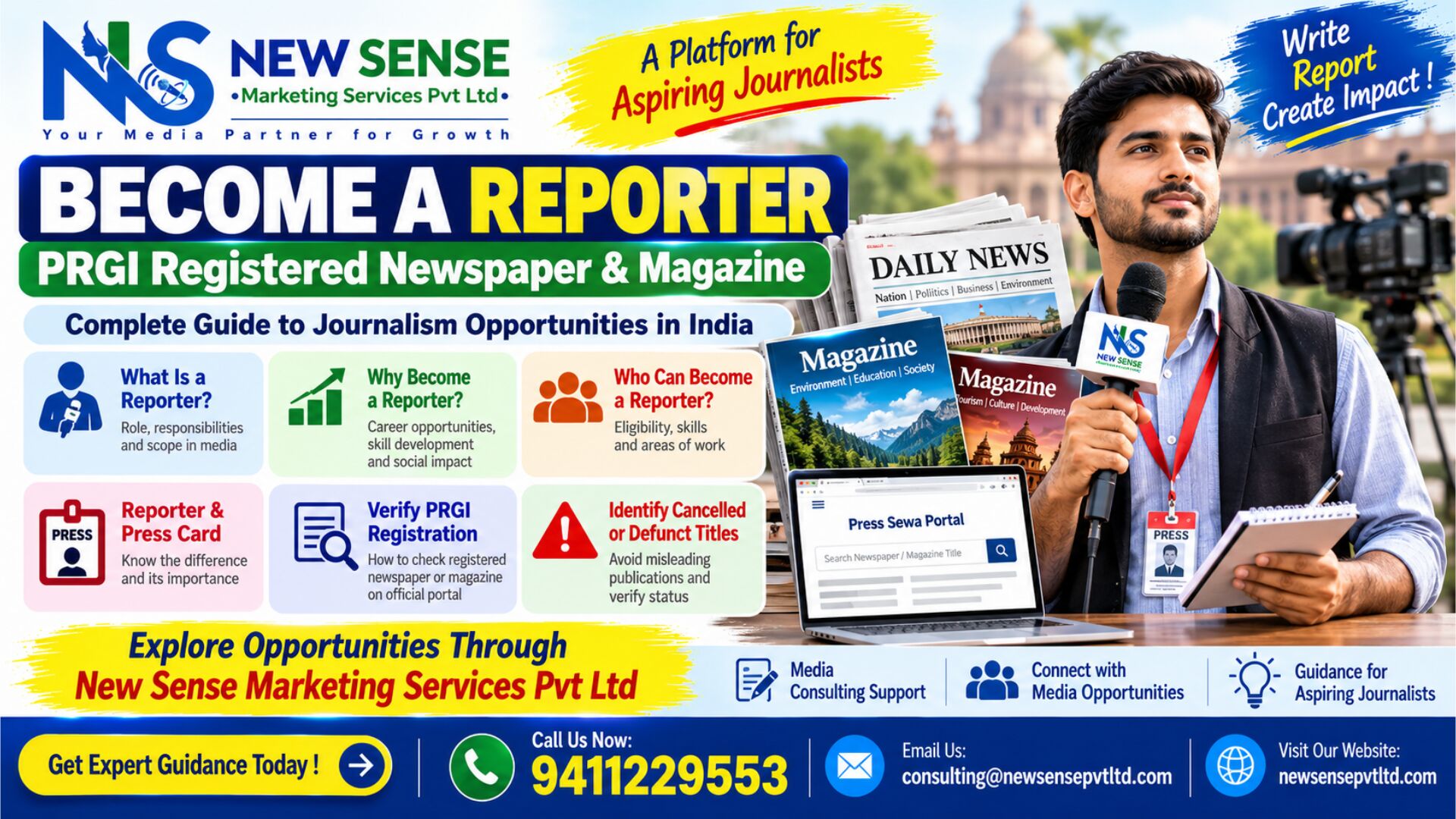
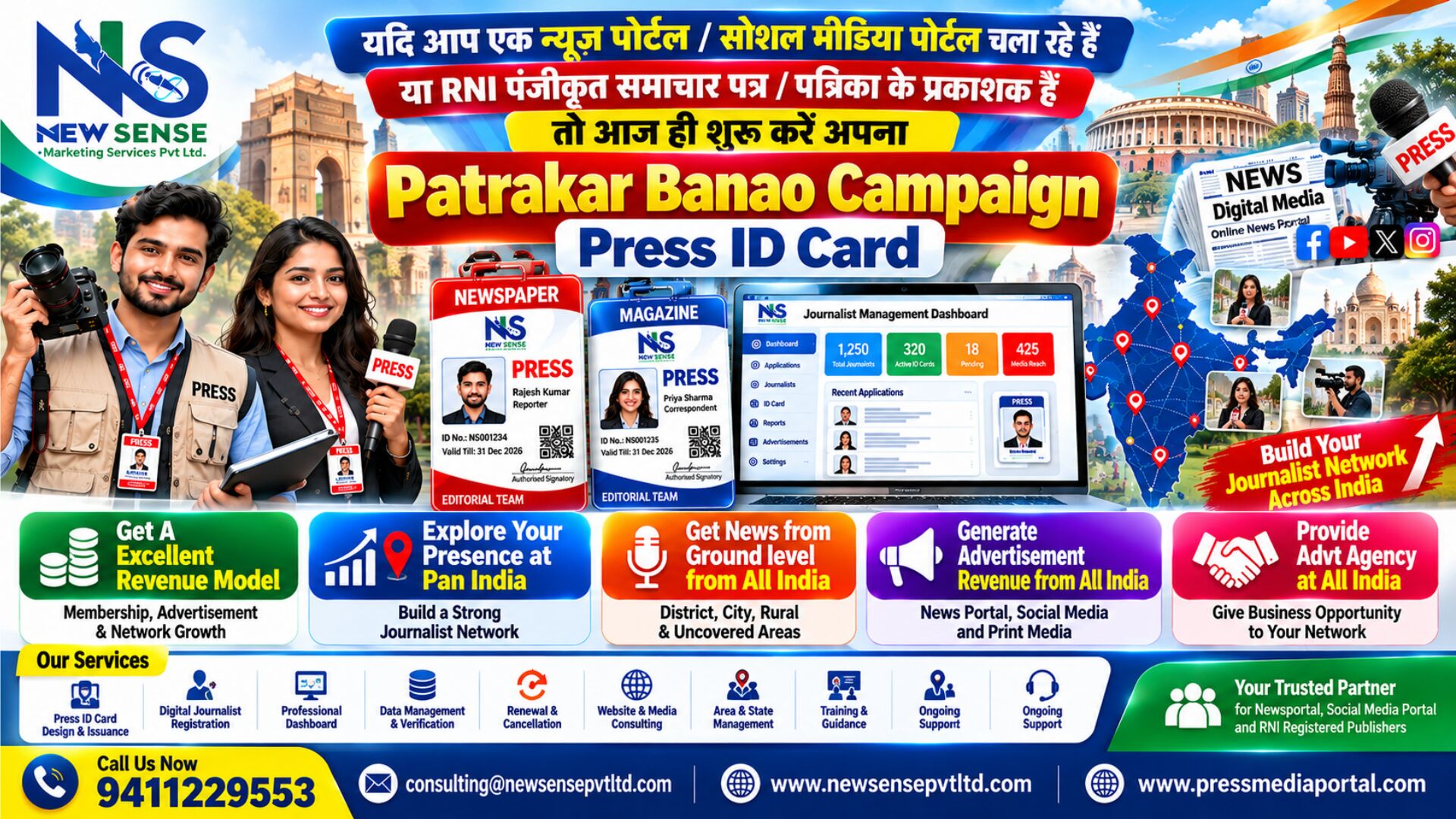
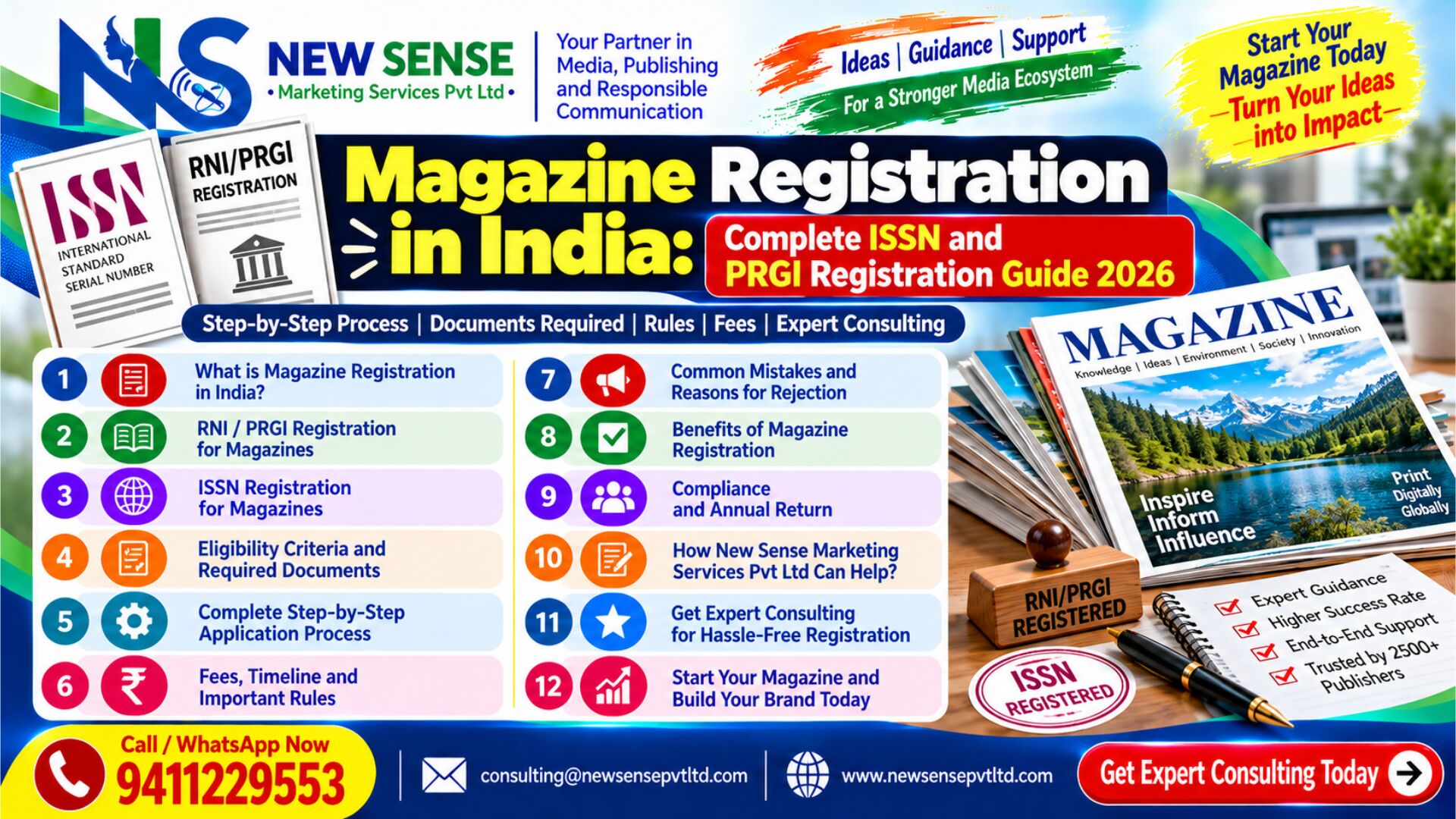

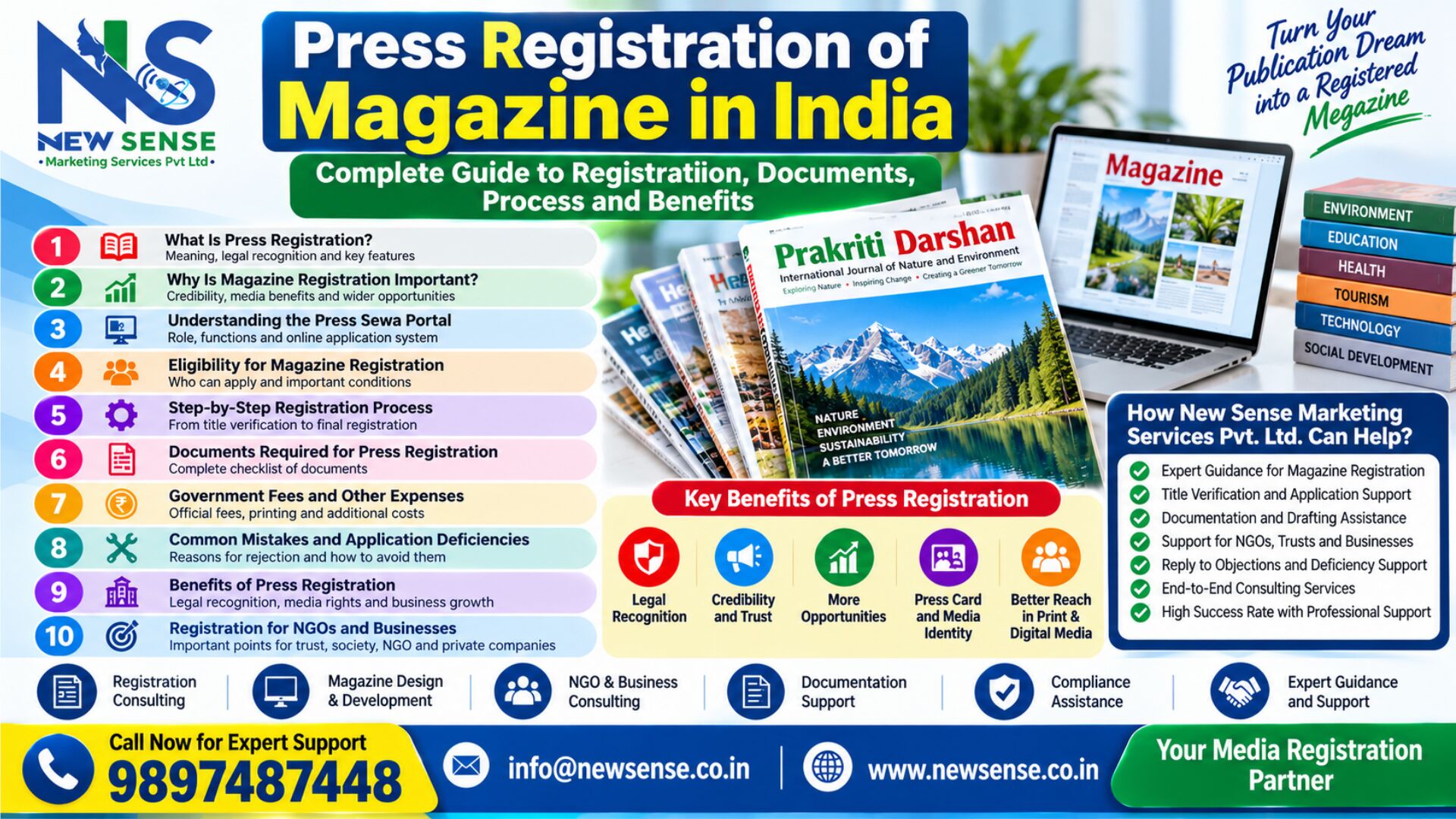
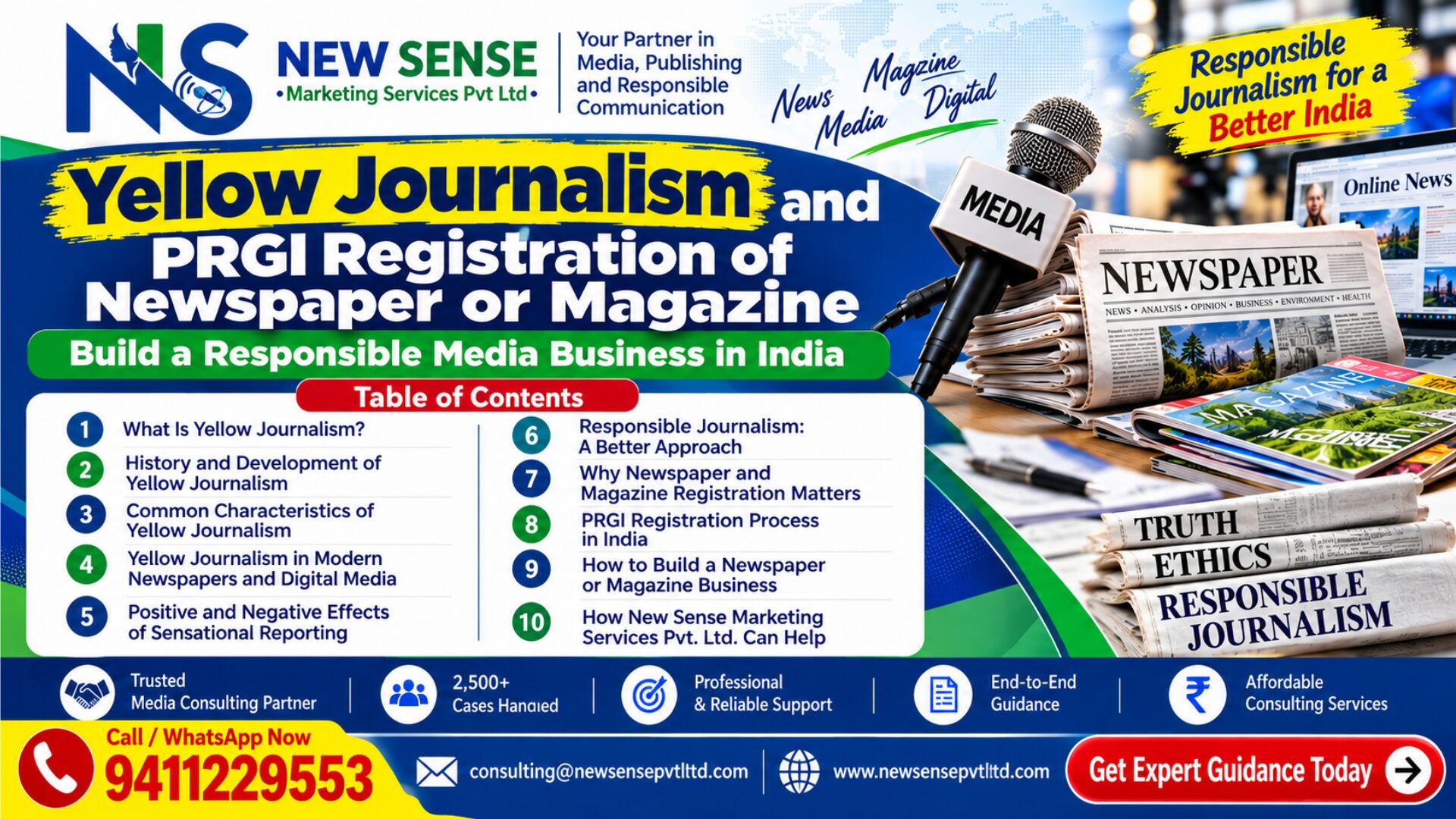
Becoming a Reporter is an exciting opportunity for individuals who want to share information, highlight public issues, cover local events, and contribute to society through journalism. A Reporter plays an important role in collecting news, interviewing people, verifying facts, and presenting information to readers through newspapers, magazines, and other media platforms.
Today, many aspiring journalists want to become a Reporter but do not know where to start. Some want to cover local news in their district, while others are interested in environmental journalism, education, health, tourism, politics, social welfare, or rural development.
One practical starting point is to approach an established newspaper or magazine that is legally registered where registration is applicable. In India, the Press Registrar General of India (PRGI) administers the registration framework for eligible periodicals under the Press and Registration of Periodicals Act, 2023.
Before accepting a reporting opportunity, it is important to verify the publication’s registration details, understand the terms of appointment, and distinguish an official press card from government accreditation.
This guide explains how to become a Reporter of a PRGI-registered newspaper or magazine, how to check publication details through official government resources, how to identify cancelled or defunct titles, and how New Sense Marketing Services Pvt Ltd may help interested individuals explore relevant media opportunities.
Table of Contents
- What Is a Reporter?
- Why Become a Reporter of a PRGI Registered Newspaper or Magazine?
- Who Can Become a Reporter?
- Reporter and Press Card: Understanding the Difference
- How to Check a PRGI Registered Newspaper or Magazine
- How to Identify Misleading, Cancelled, or Defunct Publications
- How to Become a Reporter Through New Sense Marketing Services Pvt Ltd
- Documents Required for a Reporter Appointment
- Duties and Responsibilities of a Reporter
- Benefits and Limitations of a Media and Press Card
- Important Things to Check Before Joining a Media Organization
- Frequently Asked Questions
- Conclusion
- Disclaimer
1. What Is a Reporter?
A Reporter is a person who gathers information, investigates events, interviews relevant people, verifies facts, and communicates news to the public through an authorized or established media organization.
Reporters may work for daily newspapers, weekly newspapers, monthly magazines, news agencies, digital news platforms, or other media organizations, depending on the publication’s activities and the applicable legal framework.
For example, a local Reporter may cover municipal issues, road conditions, government schemes, educational activities, public health programmes, environmental campaigns, cultural events, or community development projects.
A magazine Reporter may focus on specialized subjects such as tourism, agriculture, education, environment, business, or social development.
Common Types of Reporters
| Type of Reporter | Main Area of Work |
| District Reporter | District-level news and public issues |
| Local Reporter | Local events, civic problems, and community news |
| Political Reporter | Political developments and public administration |
| Education Reporter | Schools, colleges, examinations, and education policy |
| Environmental Reporter | Climate, wildlife, forests, and environmental protection |
| Health Reporter | Public health information and healthcare developments |
| Magazine Reporter | Feature stories, interviews, and specialized articles |
| Investigative Reporter | In-depth investigation and evidence-based reporting |
The best reporting field depends on your interests, skills, availability, and the needs of the publication.
2. Why Become a Reporter of a PRGI Registered Newspaper or Magazine?
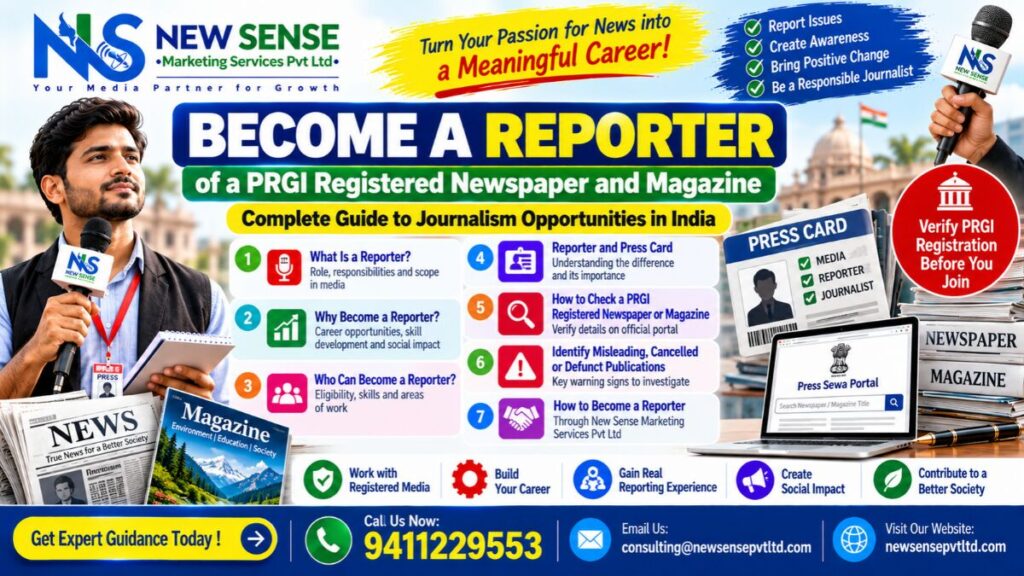
Working with a genuine newspaper or magazine can help an aspiring Reporter develop professional experience, build a portfolio, and establish connections with editors, publishers, and other journalists.
Where applicable, verifying a publication’s PRGI registration provides an additional way to check its official registration particulars.
Key Advantages of Becoming a Reporter
1. Opportunity to develop journalism skills
You can learn news gathering, interviewing, writing, fact-checking, headline writing, and editorial communication.
2. Local recognition
A Reporter who regularly produces credible stories may build recognition among readers, local institutions, and community organizations.
3. Professional portfolio
Published news reports, interviews, photographs, and feature articles can help demonstrate your reporting experience when approaching other media organizations.
4. Networking opportunities
Reporting can connect you with public representatives, educators, business owners, social workers, government officials, and subject experts.
5. Social impact
Responsible reporting can bring attention to public problems, promote awareness, and highlight constructive initiatives.
However, joining a newspaper or magazine does not automatically guarantee a salary, a permanent job, government recognition, or a particular level of professional success. These matters depend on the appointment terms and the relevant organization.
3. Who Can Become a Reporter?
People from different educational and professional backgrounds may pursue reporting opportunities. The eligibility criteria depend on the newspaper or magazine and the position being offered.
Students, graduates, experienced writers, social workers, photographers, and individuals interested in local journalism may explore suitable opportunities.
A journalism degree can be beneficial, but not every reporting position necessarily requires one. The organization may consider writing ability, communication skills, subject knowledge, experience, and the ability to verify information.
Essential Skills for a Successful Reporter
- Strong written and verbal communication.
- Ability to identify newsworthy events.
- Accurate collection and verification of information.
- Interviewing and research skills.
- Knowledge of local issues and public affairs.
- Ethical conduct and respect for privacy.
- Ability to meet editorial deadlines.
- Familiarity with photography, mobile reporting, and digital publishing.
A new Reporter should begin with manageable assignments and develop accuracy and credibility before pursuing more demanding reporting responsibilities.
4. Reporter and Press Card: Understanding the Difference
A press card is commonly used by a media organization to identify a person associated with its reporting activities. However, a press card is not, by itself, proof that the holder is a government-accredited journalist.
The terms Reporter ID Card, Press Card, and Media Identity Card are sometimes used interchangeably by media organizations. Their actual significance depends on who issues the card, the person’s appointment, the card’s validity, and the applicable rules.
Reporter Appointment Letter vs. Press Card
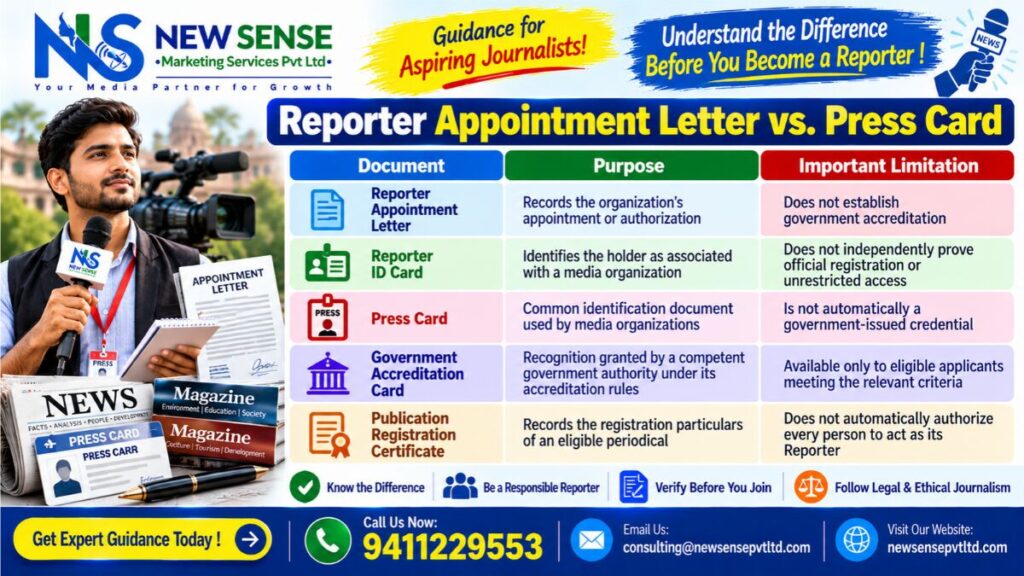
| Document | Purpose | Important Limitation |
| Reporter Appointment Letter | Records the organization’s appointment or authorization | Does not establish government accreditation |
| Reporter ID Card | Identifies the holder as associated with a media organization | Does not independently prove official registration or unrestricted access |
| Press Card | Common identification document used by media organizations | Is not automatically a government-issued credential |
| Government Accreditation Card | Recognition granted by a competent government authority under its accreditation rules | Available only to eligible applicants meeting the relevant criteria |
| Publication Registration Certificate | Records the registration particulars of an eligible periodical | Does not automatically authorize every person to act as its Reporter |
Can a Reporter Get a Press Card?
A newspaper or magazine may issue an identity card to a person it has appointed, subject to its policies and applicable requirements.
Before accepting a card, confirm that it contains accurate information, including the issuing organization’s name, the holder’s identity, the designation, the validity period where applicable, and a verifiable contact or authorization process.
Never assume that possession of a press card grants entry to restricted locations, exemption from legal requirements, special treatment by public authorities, or government accreditation.
5. How to Check a PRGI Registered Newspaper or Magazine to Become a Reporter
Before joining a publication, prospective Reporters should independently verify its registration details using official government resources.
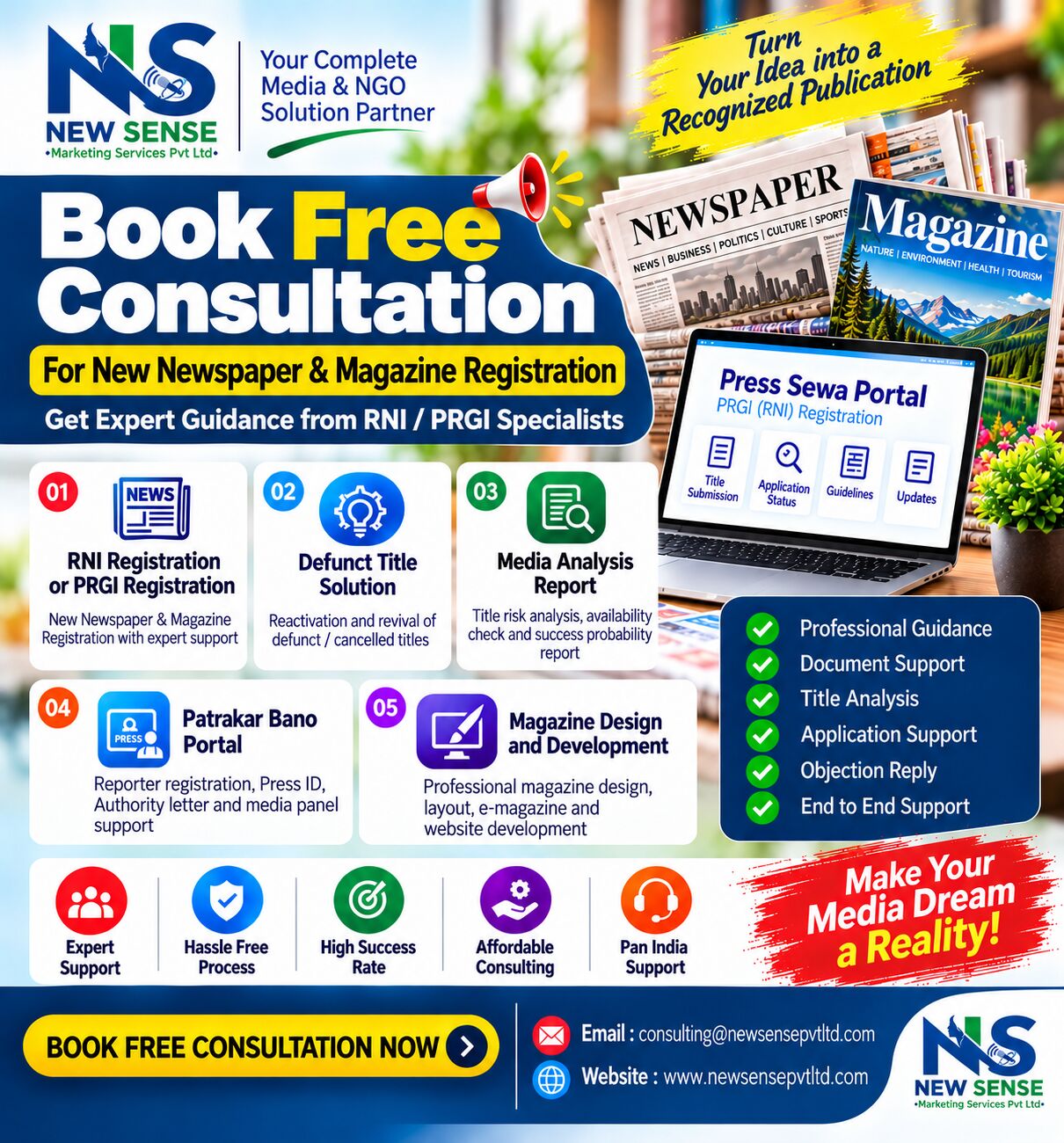
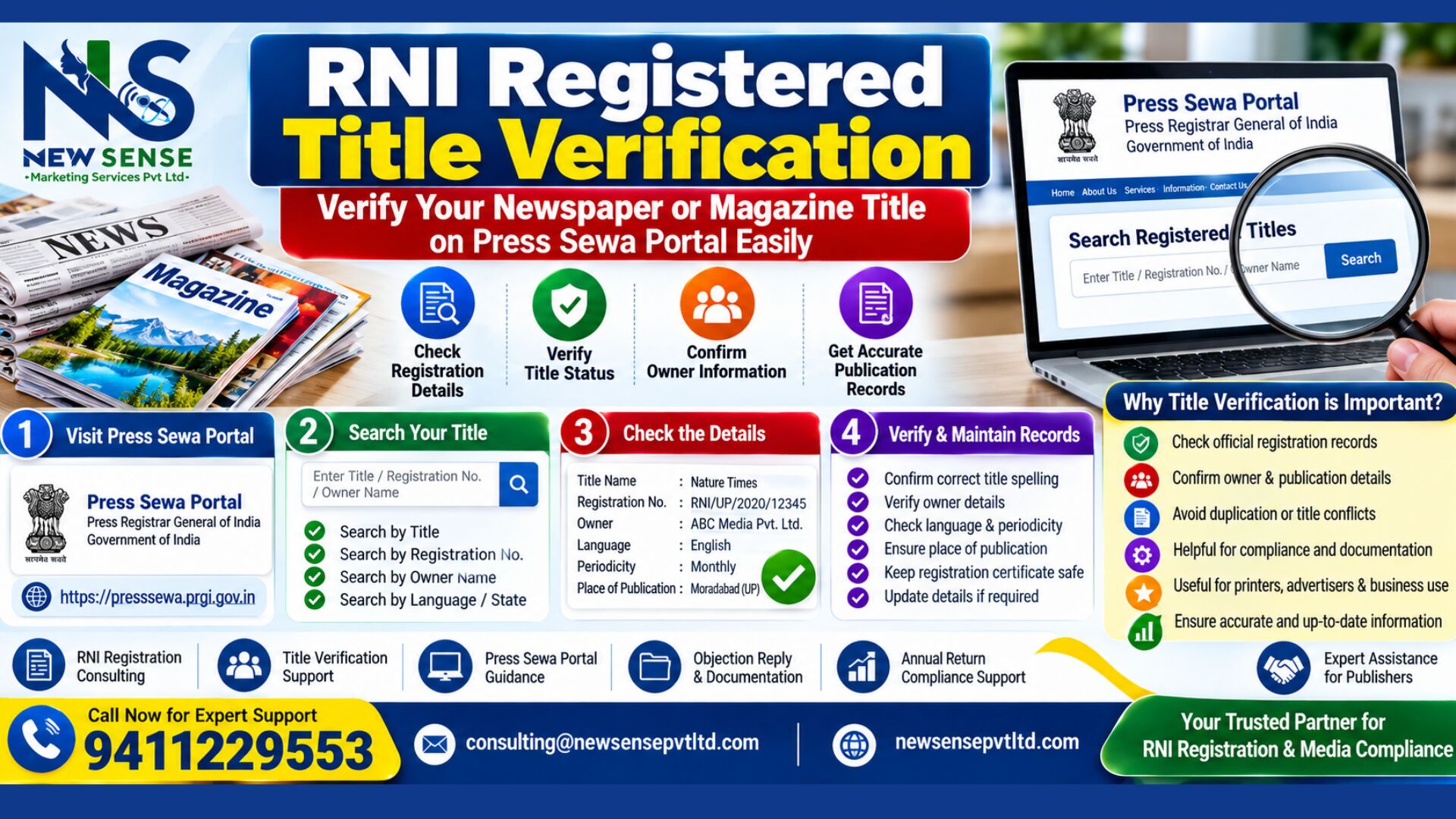
The Press Registrar General of India maintains online resources for checking registered titles and accessing information about the registration framework. The Press Sewa Portal is the official online platform used for relevant applications, documents, and registration-related services.
Official resources:
- PRGI website: https://prgi.gov.in/
- Press Sewa Portal: https://presssewa.prgi.gov.in/#/
- PRGI registered titles search: https://prgi.gov.in/en/our-services/registration-title-details
- PRGI search title page: https://prgi.gov.in/search-title
The official registered-title search provides fields such as title, registration number, owner, publication state, district, and language. Availability of specific information may vary by record. See the official PRGI registered-title search and guidance for details.
Step-by-Step Process to Verify a Publication
Step 1: Collect the publication’s details
Ask the editor, publisher, or owner for the exact newspaper or magazine title, registration number, language, place of publication, and a copy of the registration certificate.
Step 2: Open the official PRGI website
Visit the PRGI website and locate the registered-title search facility.
Step 3: Search using the exact title
Enter the publication’s name carefully. If the title is common, compare the other available details rather than relying on the name alone.
Step 4: Compare the registration particulars
Check the registration number, owner, publisher, language, periodicity, and publication location against the information supplied by the organization.
Step 5: Review the available record
Where possible, open the registration details and compare them with the original certificate. Ask the publisher to explain any material discrepancies.
Step 6: Check the publication’s current position
Do not assume that an old registration certificate proves the publication is currently active and compliant. Review relevant official notices and available status information.
Step 7: Keep evidence of verification
Save the official record or relevant details for your own reference, along with the appointment letter and other documents supplied by the publication.
A successful search is an important verification step, but it is not a guarantee of editorial quality, financial reliability, or the legitimacy of every person representing the publication.
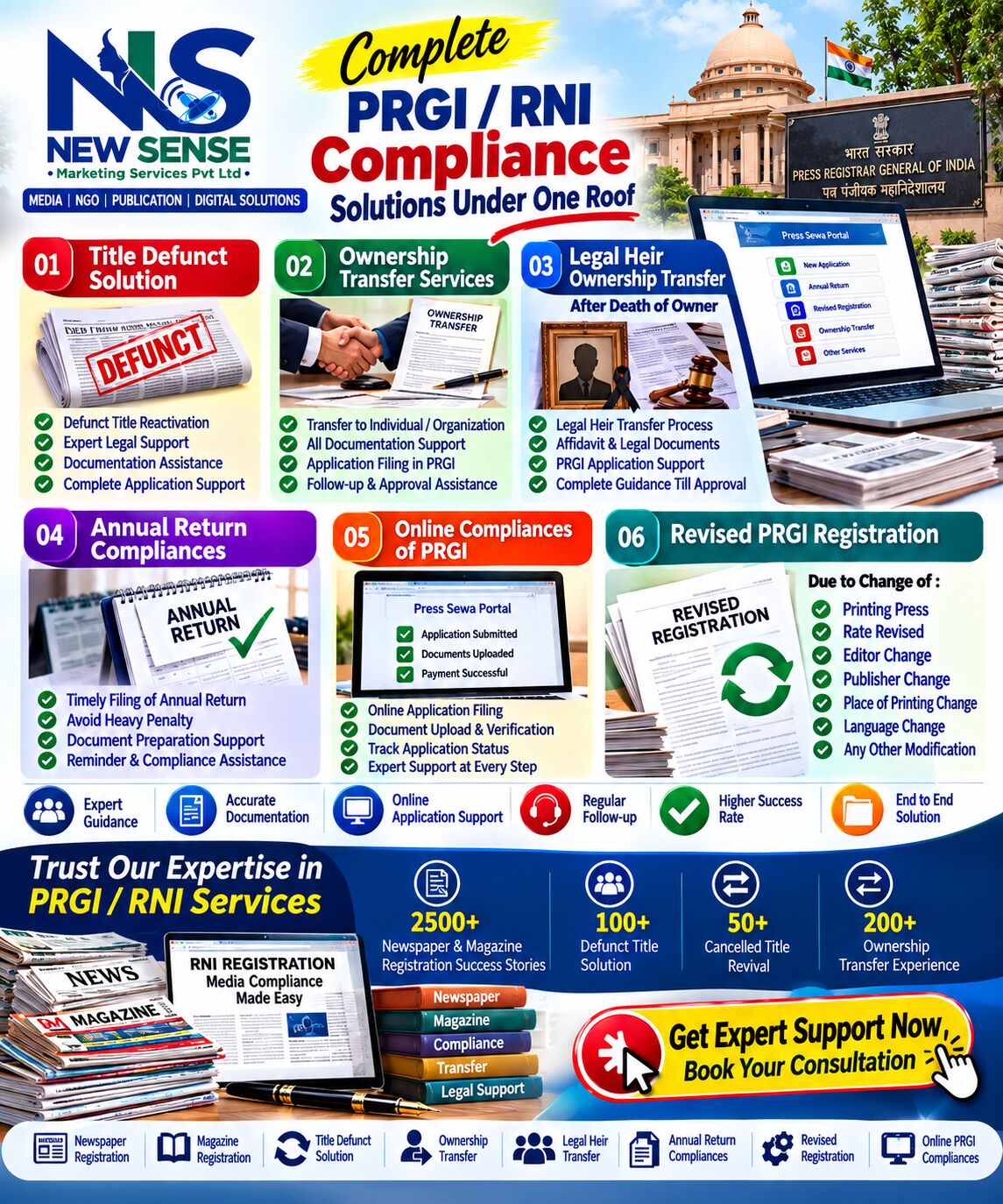
6. How to Identify Misleading Newspapers or Magazines by Checking Cancelled or Defunct Titles
One of the most important precautions for a prospective Reporter is to identify publications whose registration has been cancelled or whose titles appear in official defunct-title information.
A publication may continue to display an old registration certificate, outdated website information, or an old press card even when its registration status requires further investigation.
PRGI publishes official notices and information relating to cancelled, defunct, and unmapped titles. Its latest updates should be consulted for the relevant lists and advisories.
For example, PRGI’s official updates include Advisory No. 21 of 2026, dated 24 August 2026, concerning defunct and unmapped titles. The applicable list and any subsequent updates should be checked directly on the official website.
Official resources:
- PRGI latest updates: https://prgi.gov.in/en/latest-updates
- PRGI cancelled-title information: https://prgi.gov.in/our-services/cancelled-data-for-website
- Press Sewa Portal: https://presssewa.prgi.gov.in/#/
Warning Signs to Investigate
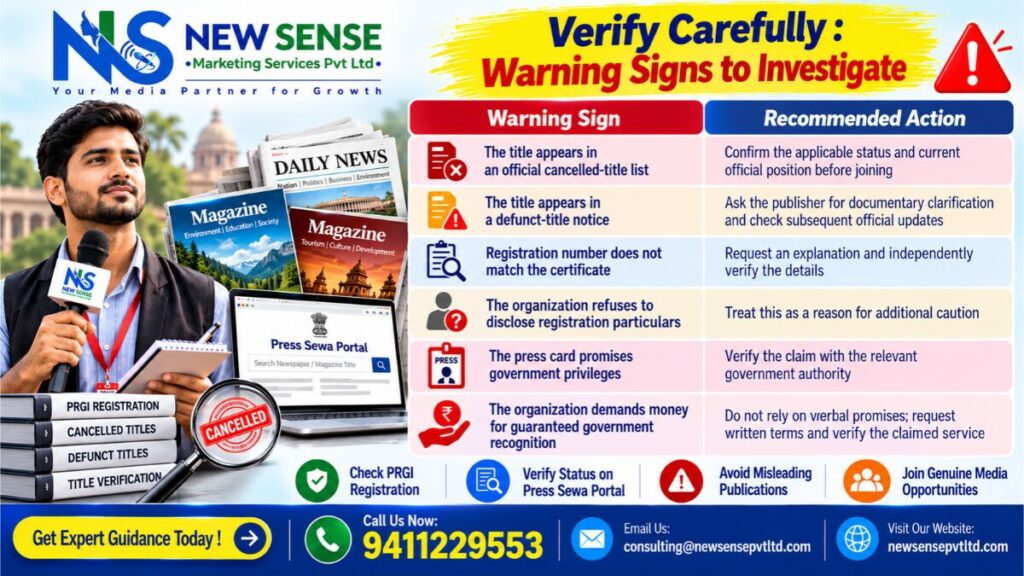
| Warning Sign | Recommended Action |
| The title appears in an official cancelled-title list | Confirm the applicable status and current official position before joining |
| The title appears in a defunct-title notice | Ask the publisher for documentary clarification and check subsequent official updates |
| Registration number does not match the certificate | Request an explanation and independently verify the details |
| The organization refuses to disclose registration particulars | Treat this as a reason for additional caution |
| The press card promises government privileges | Verify the claim with the relevant government authority |
| The organization demands money for guaranteed government recognition | Do not rely on verbal promises; request written terms and verify the claimed service |
What Does a Cancelled or Defunct Title Mean for a Reporter?
A cancelled title and a defunct title are not necessarily interchangeable administrative categories. Their consequences depend on the applicable official record, order, and subsequent action by PRGI.
If a publication appears on a relevant list, do not make assumptions based on an old certificate or the continued circulation of a press card. Ask the publisher to provide documentary evidence of the current status and verify it through the official portal.
Also remember that a publication not appearing in one search result is not conclusive proof that it is fake. Records may require additional searches, mapping, or clarification. Check the official resources carefully before reaching a conclusion.
7. How Can You Get a PRGI Registered Newspaper or Magazine Opportunity Through New Sense Marketing Services Pvt Ltd?
New Sense Marketing Services Pvt Ltd provides media-related consulting and services associated with newspaper and magazine publishing. Individuals who want to become a Reporter may explore the company’s website to find out whether relevant opportunities, publisher contacts, or media services are available.
Website: https://newsensepvtltd.com/
Important: The availability of Reporter positions, district-level appointments, press cards, or particular publications must be confirmed directly. Do not assume that every visitor to the website is automatically eligible for an appointment.
How to Explore an Opportunity
Step 1: Visit the website
Review the available publication information, editorial content, contact details, and media-related services.
Step 2: Identify the relevant publication
Determine whether you are interested in reporting for a newspaper, magazine, or another media platform. Confirm the exact title and its current status.
Step 3: Contact the organization
Ask whether Reporter opportunities are available in your district, city, or preferred subject area.
Step 4: Submit your professional profile
Prepare a brief introduction containing your name, location, education or experience, reporting interests, language skills, and contact details.
Step 5: Discuss the appointment conditions
Ask about the designation, territory, editorial supervision, reporting expectations, payment or commission arrangements, expenses, and appointment duration.
Step 6: Verify the documents
Before using a press card or representing the publication, obtain the written appointment or authorization and check the relevant publication details.
What Should You Ask New Sense Marketing Services Pvt Ltd?
- Are Reporter appointments currently available?
- Which publication will the Reporter represent?
- Is the opportunity paid, commission-based, voluntary, or assignment-based?
- Is a written appointment letter provided?
- What are the rules and charges, if any, for an identity card?
- What are the reporting area and editorial responsibilities?
- How can the publication’s registration particulars be verified?
- What is the process for renewal or termination of the appointment?
These questions help applicants understand the opportunity before making a financial or professional commitment.
8. Documents Required for a Reporter Appointment
The required documents depend on the organization and the role. A typical application may involve the following:
- A completed application form or professional profile.
- A recent photograph.
- Proof of identity, where required.
- Contact information and residential or professional address.
- Educational or experience details, if requested.
- Samples of published articles, photographs, or reporting work.
- A signed appointment letter or agreement, where applicable.
- Any additional documents reasonably required by the organization.
Submit personal information only through a reliable and appropriate channel. Ask why sensitive documents are needed and how they will be used.
Do not provide false qualifications, fabricated work samples, or misleading information about previous employment.
9. Duties and Responsibilities of a Reporter
Being a Reporter involves more than carrying a press card or publishing photographs on social media. The central responsibility is to communicate accurate, fair, and relevant information.
Core Responsibilities
Collect verified information: Obtain information from reliable sources and distinguish confirmed facts from allegations or rumours.
Interview relevant people: Give appropriate parties an opportunity to respond to matters concerning them.
Check evidence: Verify dates, locations, documents, quotations, names, and other essential facts before publication.
Follow editorial standards: Work within the publication’s editorial policies and correct errors promptly.
Respect privacy: Avoid unnecessary disclosure of personal information and follow applicable legal and ethical safeguards, especially when reporting on children or vulnerable people.
Avoid conflicts of interest: Disclose relevant conflicts and do not misuse a reporting position for personal gain.
Protect professional credibility: Never fabricate a story, accept payment in exchange for suppressing legitimate news, or threaten individuals by misusing a media identity card.
A credible Reporter earns trust through accuracy, independence, fairness, and consistent professional conduct.
10. Benefits and Limitations of a Media and Press Card
A properly issued media identity card may help identify a Reporter when communicating with sources or carrying out authorized assignments. However, its usefulness depends on the issuing organization, the assignment, and the circumstances.
Potential Benefits
- Identification as a representative of a media organization.
- Easier communication with editors and colleagues.
- Support for routine professional identification.
- Recognition of an appointment within the issuing organization.
- A reference to the publication and the holder’s designation.
Important Limitations
A press card does not automatically provide:
- Government accreditation.
- Guaranteed entry to government offices or restricted areas.
- Permission to cross security barriers.
- Exemption from traffic rules or other laws.
- Guaranteed employment or monthly income.
- Authority to demand information from any person.
- Legal immunity for published content.
A Reporter must follow applicable law, access rules, and the instructions of competent authorities.
11. Important Things to Check Before Joining a Media Organization
Before accepting a Reporter appointment, carefully evaluate the publication and the proposed terms.
- Verify the publication’s registration details where registration is applicable.
- Review relevant cancellation, defunct-title, or other status notices.
- Read the appointment letter and retain a copy.
- Understand whether the position is paid, voluntary, or commission-based.
- Obtain written information about fees, card charges, and renewal terms.
- Check who supervises your reporting and approves publication.
- Avoid promises of guaranteed government recognition or special legal privileges.
- Confirm the process for correcting errors, handling complaints, and ending the appointment.
- Keep records of assignments and communications.
- Never misrepresent your role to obtain money, access, or personal benefits.
A genuine opportunity should be explained transparently, with clear responsibilities and reasonable verification procedures.
12. Frequently Asked Questions About Becoming a Reporter
1. How can I become a Reporter in India?
Identify a suitable media organization, prepare a professional profile, apply for a relevant position, and complete its selection and appointment process. Verify the publication and understand the appointment conditions before starting.
2. What is a PRGI registered newspaper?
It is a newspaper or other eligible periodical registered under the applicable framework administered by the Press Registrar General of India. Its registration details can be checked through official PRGI resources.
3. Can I become a Reporter without a journalism degree?
Some reporting opportunities may be open to applicants without a journalism degree. Eligibility depends on the publication, the position, and any applicable requirements.
4. What is the difference between a Reporter and a journalist?
A Reporter generally focuses on gathering, verifying, and presenting news. Journalist is a broader term that may include Reporters, editors, correspondents, feature writers, and investigative journalists.
5. Is a press card compulsory for every Reporter?
Requirements vary according to the organization, assignment, and access rules. A press card may be issued by the organization, but it is not a universal substitute for other required permissions or credentials.
6. Does a press card provide government recognition?
No. A card issued by a private media organization does not automatically constitute government accreditation. Accreditation is governed by the relevant authority’s rules.
7. How can I check whether a newspaper is registered with PRGI?
Visit the official PRGI website and use its registered-title search. Compare the exact title, registration number, owner, language, and other available particulars.
8. How can I identify a cancelled newspaper title?
Check the official PRGI cancelled-title information and relevant notices. If a title appears on a list, review the applicable order and any subsequent official updates before drawing conclusions.
9. What should I do if a magazine appears on a defunct-title list?
Ask the publisher for documentary clarification and verify the current position using official PRGI information. Do not rely solely on an old registration certificate.
10. Can a Reporter work for a magazine instead of a newspaper?
Yes. Depending on the publication and the available position, a Reporter may cover interviews, features, environment, education, tourism, social development, and other subjects for a magazine.
11. Can a student become a Reporter?
A student may explore suitable reporting opportunities if the organization accepts the applicant and the person meets its requirements. Students should balance their responsibilities and carefully review the appointment conditions.
12. Does becoming a Reporter guarantee a salary?
No. Payment depends on the written terms of the appointment. Some opportunities may be salaried, while others may be assignment-based, commission-based, or voluntary.
13. Can a Reporter use a press card to enter government offices?
A press card does not automatically grant access. Entry depends on the applicable security procedures, permissions, accreditation rules, and the authority responsible for the premises.
14. How can I apply for a Reporter opportunity through New Sense Marketing Services Pvt Ltd?
Visit https://newsensepvtltd.com/ and review the available information. Contact the organization to ask about current opportunities, eligible publications, appointment terms, and the application process.
15. Does New Sense Marketing Services Pvt Ltd guarantee a Reporter appointment?
Applicants should confirm availability and eligibility directly with the company. No appointment should be assumed unless the organization confirms it through an appropriate process.
16. Can New Sense Marketing Services Pvt Ltd help me understand media-related services?
The company provides media-related consulting and publishing services. Contact it directly to establish which services are currently available and whether any particular service meets your requirements.
17. Can I obtain a Reporter ID card through New Sense Marketing Services Pvt Ltd?
Ask the company whether an identity card is available for an eligible appointment, which publication it relates to, and what documentation or charges apply. An ID card should not be treated as automatic government accreditation.
18. Is a PRGI registration certificate enough to prove that every Reporter represents the publication?
No. The certificate concerns the publication’s registration particulars. A Reporter should also have valid authorization or an appointment from the relevant media organization.
19. Can I report news in my local language?
Many publications accept reporting in regional languages, depending on their editorial needs and publication language. Confirm the required language, writing standards, and reporting area before applying.
20. What should I do if an organization makes misleading claims about a press card?
Request written clarification, independently verify the claims with the relevant authority, and avoid paying for promises of guaranteed government recognition or legal privileges.
13. Conclusion: Start Your Journalism Journey as a Responsible Reporter
Becoming a Reporter of a PRGI-registered newspaper or magazine can be a useful starting point for individuals interested in journalism, local news, public awareness, and social development. The right opportunity can help you build reporting skills, develop a portfolio, and establish professional connections.
However, a responsible career begins with verification. Check the publication’s registration details through official PRGI resources, review relevant cancelled or defunct-title notices, understand the appointment terms, and distinguish an organization-issued press card from government accreditation.
If you are interested in exploring media opportunities, visit the New Sense Marketing Services Pvt Ltd website at https://newsensepvtltd.com/ and contact the organization to ask about current Reporter opportunities and applicable conditions.
Remember: A press card may identify your professional association, but your credibility as a Reporter comes from accurate reporting, ethical conduct, and public trust.
Contact New Sense Marketing Services Pvt Ltd
- Website: https://newsensepvtltd.com/
- Contact / WhatsApp: 94112 29553
- Email : consulting@newsensepvtltd.com
- Our Magazine: https://prakritidarshan.com/
- Our Newspaper: https://prakritidarshannews.com/
- Our International Journal (ISSN): https://prakritidarshanjournal.com/index.php/pdijemds/index
14. Disclaimer
This article is intended for general informational and educational purposes. It is not legal advice, a government notification, an employment offer, or a guarantee of appointment.
PRGI registration and the status of individual publications must be verified through official government resources. Registration details, cancelled-title lists, defunct-title notices, and applicable requirements may change.
A press card issued by a private organization does not automatically provide government accreditation, special legal privileges, unrestricted access, or immunity from applicable laws.
Readers should independently verify relevant information and review all terms before accepting an appointment or paying for a service.