






World NGO Day 27 February, NGO Registration in India, Trust Registration, CSR Grants for NGOs, Animal NGO Registration, Magazine Registration for NGOs, NGO Revenue Model, NGO Consulting Services
Table of Contents
- Introduction to World NGO Day
- History and Significance of World NGO Day
- Objectives of World NGO Day
- How NGOs Can Celebrate World NGO Day
- Types of NGOs and Non-Profit Organizations in India
- NGO Registration and Trust Registration
- Animal NGO Registration and Welfare Activities
- CSR Grants and Funding Opportunities for NGOs
- Magazine Registration for NGOs and Social Work Promotion
- Revenue Models for Sustainable NGO Development
- How New Sense Marketing Services Pvt Ltd Supports NGOs
- Frequently Asked Questions About World NGO Day and NGO Services
- Conclusion
- Disclaimer
1. Introduction to World NGO Day
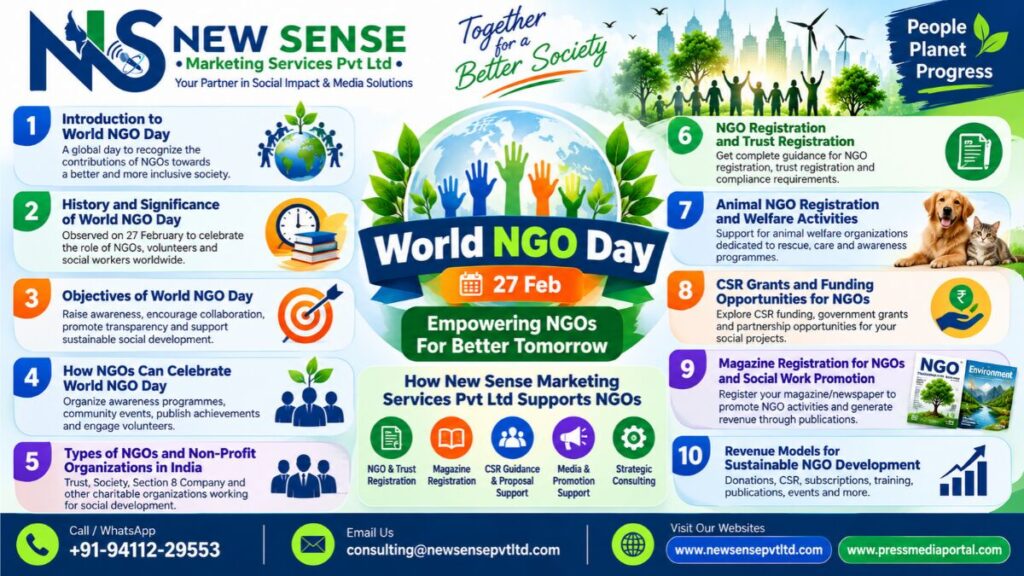
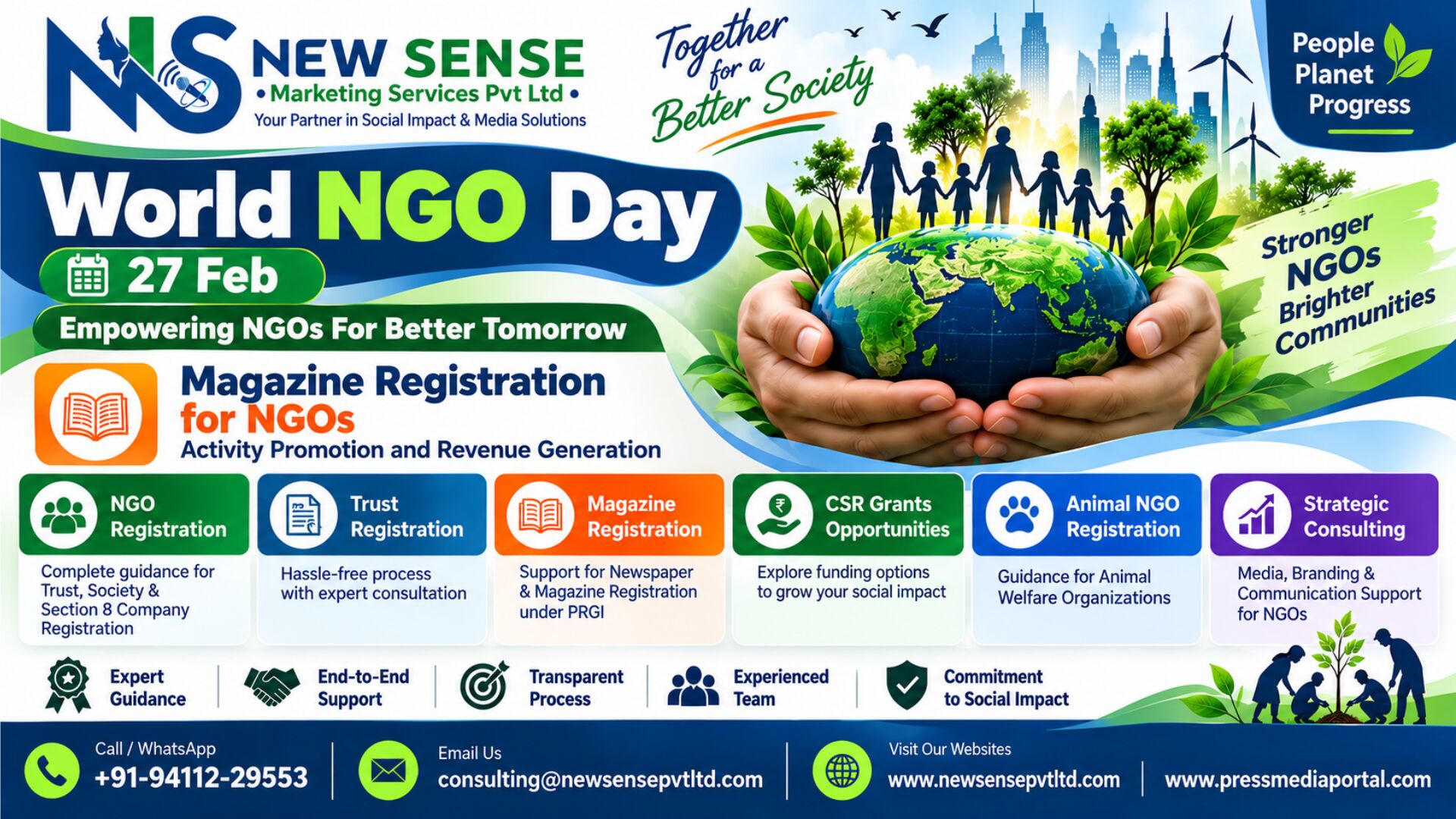
World NGO Day is observed every year on 27 February to recognize the contributions of non-governmental organizations (NGOs), non-profit institutions, volunteers, social workers, and community leaders who work to improve society. The day highlights the importance of collective action, social responsibility, environmental protection, education, healthcare, animal welfare, and community development.
NGOs often work with communities that require additional support, including children, women, senior citizens, persons with disabilities, economically disadvantaged families, and rural populations. Their activities may include educational assistance, health awareness, environmental conservation, skill development, disaster relief, and livelihood promotion.
World NGO Day provides an opportunity to celebrate these efforts and encourage greater cooperation among NGOs, government institutions, corporate organizations, media platforms, donors, and the public.
For Indian NGOs, World NGO Day 27 February can also be a practical occasion to review organizational registration, project documentation, funding strategies, public awareness activities, and long-term sustainability plans.
A registered NGO with a clearly defined mission, transparent financial records, measurable project outcomes, and an effective communication strategy is better positioned to build public trust and explore appropriate funding opportunities.
2. History and Significance of World NGO Day
The concept of World NGO Day was developed in 2009 by Marcis Liors Skadmanis. The first World NGO Day forum was held in Helsinki, Finland, in February 2014, helping the initiative gain wider international attention.
The observance recognizes the people working behind non-profit organizations, including founders, employees, volunteers, members, donors, and community partners. Its central concept can be understood through three actions: celebrate the contribution of NGOs, commemorate those who have dedicated themselves to public service, and collaborate to address shared social challenges.
World NGO Day is not only a celebration. It is also an opportunity to discuss how organizations can strengthen accountability, improve public awareness, develop partnerships, and make their social impact more sustainable.
For NGOs in India, 27 February is an ideal date to publish an annual activity report, recognize volunteers, organize a community event, announce a new initiative, share project success stories, or develop partnerships with responsible businesses.
3. Objectives of World NGO Day
The main objectives of World NGO Day include the following:
Recognizing social contributions: Acknowledge the work of organizations that address education, healthcare, poverty, environmental challenges, animal welfare, and other community needs.
Increasing public awareness: Help citizens understand how NGOs work, whom they serve, and how people can contribute through volunteering, donations, professional expertise, and community participation.
Encouraging collaboration: Promote partnerships between NGOs, companies, educational institutions, media organizations, government departments, and local communities.
Promoting transparency and accountability: Encourage organizations to maintain proper financial records, document their activities, communicate results honestly, and follow applicable legal requirements.
Supporting sustainable development: Encourage NGOs to develop realistic budgets, strengthen project management, build partnerships, and explore suitable funding sources.
Promoting environmental and animal welfare: Highlight initiatives such as plantation drives, wildlife conservation, animal rescue, responsible pet care, and environmental education.
Strengthening communication: Motivate NGOs to use websites, magazines, newspapers, social media, newsletters, and community events to share verified information about their work.
4. How NGOs Can Celebrate World NGO Day on 27 February
NGOs can celebrate World NGO Day through activities that match their mission, budget, and community needs.
For example, an education-focused NGO can organize a learning awareness campaign, distribute educational resources, or recognize outstanding volunteers. An environmental NGO can conduct a plantation awareness programme, community cleanliness drive, or biodiversity education session. An animal welfare NGO can arrange an adoption awareness campaign, responsible pet ownership workshop, or veterinary awareness programme in collaboration with qualified professionals.
Organizations can also publish a special World NGO Day report featuring their achievements, beneficiaries reached, photographs with appropriate consent, project expenditure summaries, and future plans.
Other useful activities include:
- Organizing a seminar on social development and community participation.
- Launching a fundraising campaign with clear objectives and transparent reporting.
- Publishing success stories through print and digital media.
- Preparing proposals for eligible CSR partnerships.
- Updating NGO registration documents and statutory compliance records.
- Developing a project calendar for the coming financial year.
- Recognizing donors, volunteers, employees, and community partners.
Table 1: World NGO Day activities and expected benefits
| Activity | Main purpose | Useful output |
| Community awareness programme | Educate the public | Attendance and activity report |
| NGO achievement report | Demonstrate social impact | Annual or special report |
| CSR partnership meeting | Explore corporate collaboration | Project concept note |
| Magazine or newspaper feature | Improve public visibility | Published article or feature |
| Volunteer recognition event | Encourage participation | Certificates and recognition |
| Environmental or animal welfare campaign | Address local needs | Documented campaign outcomes |
The activities should be selected according to genuine community requirements rather than conducted solely for publicity.
5. Types of NGOs and Non-Profit Organizations in India
People planning to establish an NGO should first identify the organization’s purpose, governance structure, geographical area of operation, and proposed activities.
In India, common organizational structures include a registered public charitable trust, a society registered under applicable law, and a Section 8 company under the Companies Act, 2013.
The appropriate structure depends on the founders’ objectives, governance requirements, state-specific laws, administrative capacity, and long-term plans. There is no single structure that is automatically suitable for every NGO.
Table 2: Common NGO registration structures in India
| Organization type | General framework | Important consideration |
| Public charitable trust | Applicable trust law and state requirements | Trust deed, trustees, charitable objects, and registration formalities |
| Society | Societies Registration Act, 1860, or applicable state law | Membership, governing body, rules, and filing requirements |
| Section 8 company | Companies Act, 2013 | Corporate governance, incorporation, reporting, and statutory compliance |
| Animal welfare NGO | Trust, society, or Section 8 company, as appropriate | Charitable objects, animal welfare activities, and any applicable permissions |
| Environmental NGO | Trust, society, or Section 8 company, as appropriate | Defined environmental objectives, project records, and relevant permissions |
An NGO should choose its legal structure after reviewing the applicable requirements. The organization must also assess whether it needs tax registrations, donor-related approvals, sector-specific permissions, or other compliance arrangements.
6. NGO Registration and Trust Registration
NGO registration in India is an important step for individuals planning to establish an organization for charitable, educational, environmental, healthcare, animal welfare, or other permitted non-profit purposes.
Before beginning the registration process, founders should clearly define the organization’s mission, activities, governance arrangements, office address, and proposed sources of funding.
The registration process depends on the selected legal structure and the relevant authority.
General steps for NGO registration
- Define the objectives: Prepare clear charitable or non-profit objectives that reflect the intended activities.
- Choose a legal structure: Compare a public charitable trust, society, and Section 8 company.
- Prepare documents: Collect the identity and address documents, photographs, office-address proof, governing documents, and other papers required for the chosen structure.
- Prepare the governing document: Draft a trust deed, memorandum and rules, or company incorporation documents, as applicable.
- Submit the application: Apply to the relevant registration authority and complete the required formalities.
- Address objections: Respond to any clarification or document requests raised by the authority.
- Complete post-registration compliance: Assess PAN, bank account, accounting, tax-related registrations, annual filings, and other applicable requirements.
What is trust registration?
Trust registration generally involves creating a trust deed that describes the charitable purpose, trustees, administration, property or funds where relevant, and operating rules of the trust.
The applicable registration procedure depends on the nature of the trust and the relevant state law. Founders should obtain appropriate legal guidance where necessary and ensure that the trust deed accurately reflects the intended charitable activities.
Is NGO registration enough to receive donations or grants?
Not always. Basic legal registration does not automatically provide income-tax exemptions, donor tax benefits, eligibility for every government scheme, or access to CSR funding.
Depending on the organization’s circumstances, additional registrations or approvals may be required. These can include income-tax registration under sections 12AB and 80G, where applicable, and CSR-related registration through Form CSR-1 when the organization seeks to act as an eligible CSR implementing agency.
NGOs should verify the current rules and eligibility conditions before making applications or promising tax benefits to donors.
7. Animal NGO Registration and Welfare Activities
Animal welfare organizations play an important role in supporting injured animals, promoting responsible pet ownership, assisting with rescue activities, and spreading awareness about humane treatment.
People planning an animal NGO should first determine whether the organization will operate an animal shelter, provide veterinary assistance through qualified professionals, conduct animal birth control activities, rescue injured animals, promote adoption, or focus on public awareness.
Animal NGO registration is not a separate universal legal structure. An animal welfare organization may be established as a suitable trust, society, or Section 8 company, depending on its objectives and applicable legal requirements.
Important considerations for an animal welfare NGO
- Include clear animal welfare and charitable objectives in the governing documents.
- Complete the relevant trust, society, or company registration process.
- Develop a realistic budget for food, shelter, veterinary care, transport, and staff.
- Maintain records of rescue cases, treatment, adoption, donations, and expenditure.
- Verify the permissions, standards, and registrations applicable to the particular activities.
- Consult the relevant authorities regarding animal shelters, veterinary services, animal birth control programmes, and other regulated activities.
- Investigate suitable grants and CSR partnerships for eligible projects.
An animal welfare NGO can also use World NGO Day on 27 February to publish an annual rescue report, organize an adoption awareness campaign, recognize volunteers, and encourage responsible community participation.
8. CSR Grants and Funding Opportunities for NGOs
Corporate Social Responsibility (CSR) can be an important source of project funding for eligible non-profit organizations in India. Companies covered by Section 135 of the Companies Act, 2013, are subject to applicable CSR requirements.
CSR projects may support eligible activities relating to education, healthcare, environmental sustainability, rural development, gender equality, livelihood enhancement, and other areas listed in Schedule VII of the Companies Act, subject to the applicable rules.
However, CSR funding is not an automatic entitlement for every registered NGO. Eligibility depends on the implementing agency’s legal status, registrations, track record where required, project scope, and the relevant CSR rules.
General CSR eligibility considerations
Eligible implementing agencies may include certain Section 8 companies, registered public trusts, and registered societies meeting the conditions in the Companies (CSR Policy) Rules, 2014, as amended.
Depending on the category of implementing agency, requirements can include registration under sections 12A/12AB and 80G of the Income-tax Act, an established track record of at least three years in similar activities where applicable, and registration through Form CSR-1.
Government-established entities and statutory bodies may be subject to different eligibility provisions. Each organization should check the category that applies to it.
How can NGOs explore CSR grants?
Step 1: Identify a genuine community need. Define the problem, target beneficiaries, geographical coverage, and intended results.
Step 2: Prepare a project proposal. Include the objectives, implementation plan, timeline, measurable outcomes, budget, monitoring arrangements, and sustainability strategy.
Step 3: Review compliance. Check the organization’s registration documents, tax-related registrations, audited accounts, annual reports, governing documents, and CSR-1 status where applicable.
Step 4: Identify suitable corporate partners. Research companies whose CSR priorities and operational areas align with the proposed project.
Step 5: Submit a tailored proposal. Explain how the project addresses a documented need and how its results will be monitored.
Step 6: Maintain transparency. If a project is approved, use the funds according to the agreement, maintain financial records, and submit the required progress and utilization reports.
Examples of potential NGO project proposals
An education NGO may propose digital learning facilities for underserved children. An environmental NGO may develop a scientifically planned plantation and maintenance programme. A livelihood-focused NGO may design vocational training for disadvantaged communities. An animal welfare organization may propose a project that fits an eligible CSR activity and meets all relevant conditions.
World NGO Day can be a useful occasion to publish project concepts, meet potential corporate partners, and share credible impact reports. Nevertheless, funding depends on eligibility, corporate priorities, due diligence, and formal approval.
NGOs should avoid anyone promising guaranteed CSR grants in exchange for an advance payment.
9. Magazine Registration for NGOs and Social Work Promotion
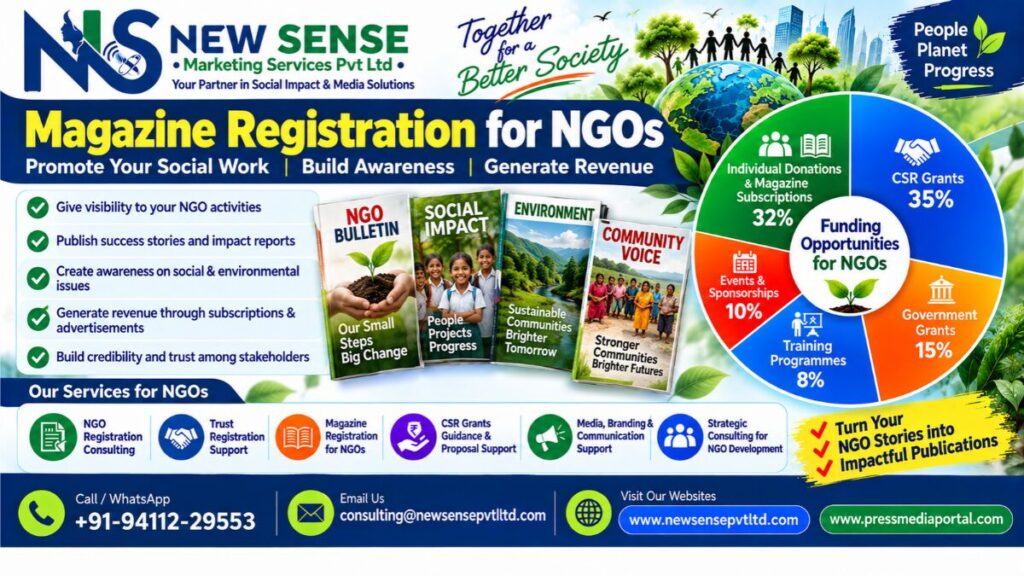
A magazine or newspaper can help an NGO communicate its activities, document social initiatives, share research, and build awareness about community development.
For organizations involved in education, health, environmental conservation, rural development, women’s empowerment, or animal welfare, a publication can provide a platform for publishing project reports, expert articles, interviews, case studies, and awareness campaigns.
However, magazine registration and NGO registration are two different processes. Registering an NGO does not automatically register a magazine, and a magazine’s registration does not itself establish charitable status.
Why should an NGO consider a magazine?
A regularly published magazine can help an organization:
- Document project outcomes and community success stories.
- Share educational and environmental information.
- Recognize volunteers, donors, researchers, and social workers.
- Develop relationships with journalists, institutions, and potential partners.
- Publish research, interviews, and field reports.
- Build an archive of activities and achievements.
Understanding magazine registration in India
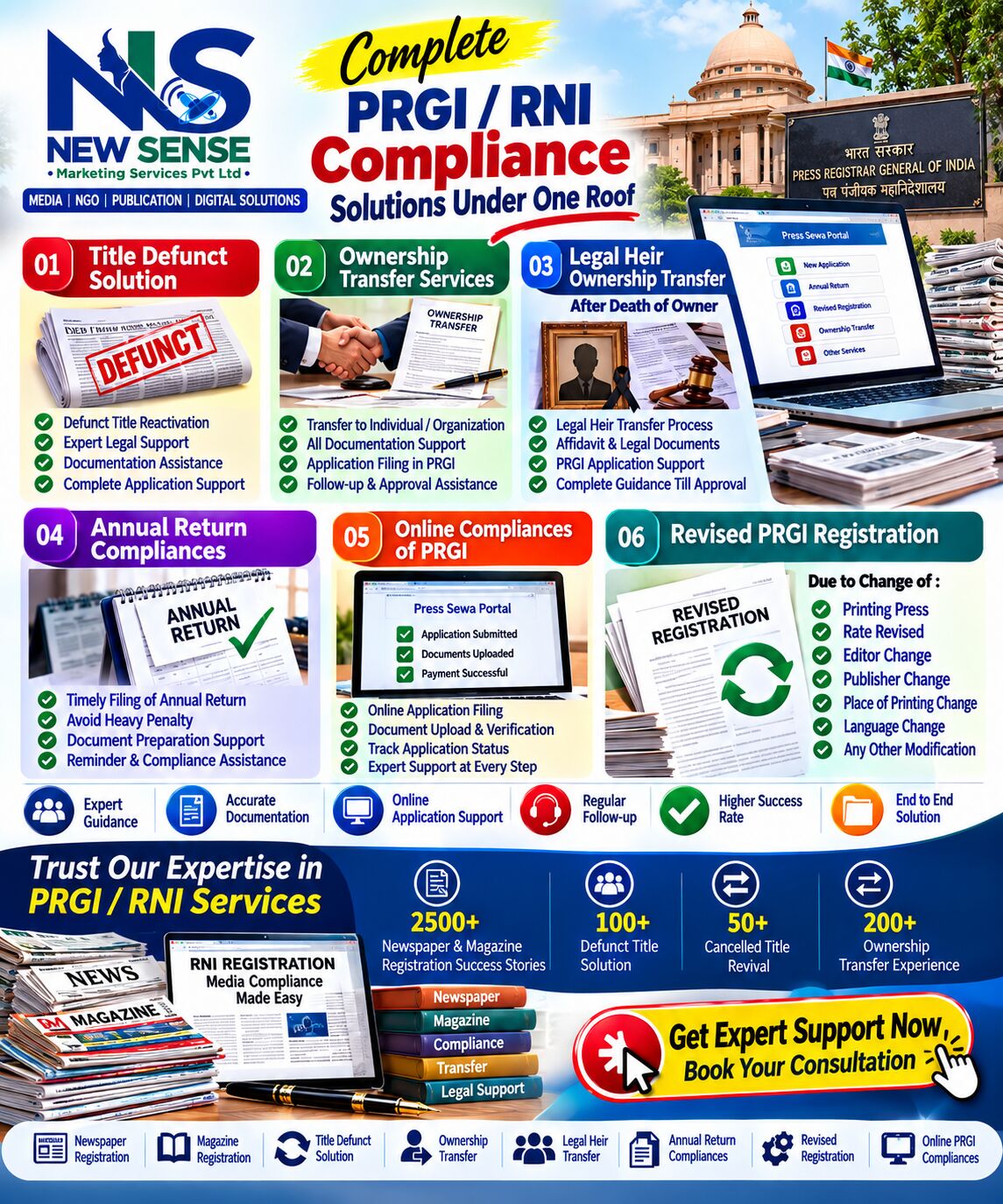
For periodicals covered by the applicable law, the registration process is governed by the Press and Registration of Periodicals Act, 2023, and the relevant rules and procedures administered by the Press Registrar General of India (PRGI).
Applicants should review the official Press Sewa Portal and applicable guidelines for the proposed periodical. Requirements can depend on the publication details, title, language, periodicity, ownership, and the applicant’s circumstances.
An NGO planning to publish a magazine should carefully review its proposed title, publication category, ownership and publisher details, documentation, and applicable filing requirements.
A magazine can be useful for communicating an NGO’s work, but the organization must also follow applicable publishing, financial, editorial, and legal requirements.
Can NGOs explore revenue through a magazine?
Potential income sources may include subscriptions, lawful advertising, sponsorship of eligible content, event partnerships, and the sale of publications or related educational material.
Any revenue must be handled in accordance with the NGO’s governing documents, applicable law, tax obligations, donor restrictions, and rules governing the publication. Advertising or sponsorship income is not guaranteed, and the organization should avoid misleading claims or undisclosed paid content.
10. Revenue Models for Sustainable NGO Development
NGOs need reliable financial planning to continue their social activities. Although many organizations depend on donations and grants, a diversified and transparent funding strategy can reduce their dependence on a single source.
A revenue model for an NGO should support its charitable mission rather than divert resources away from its intended purpose.
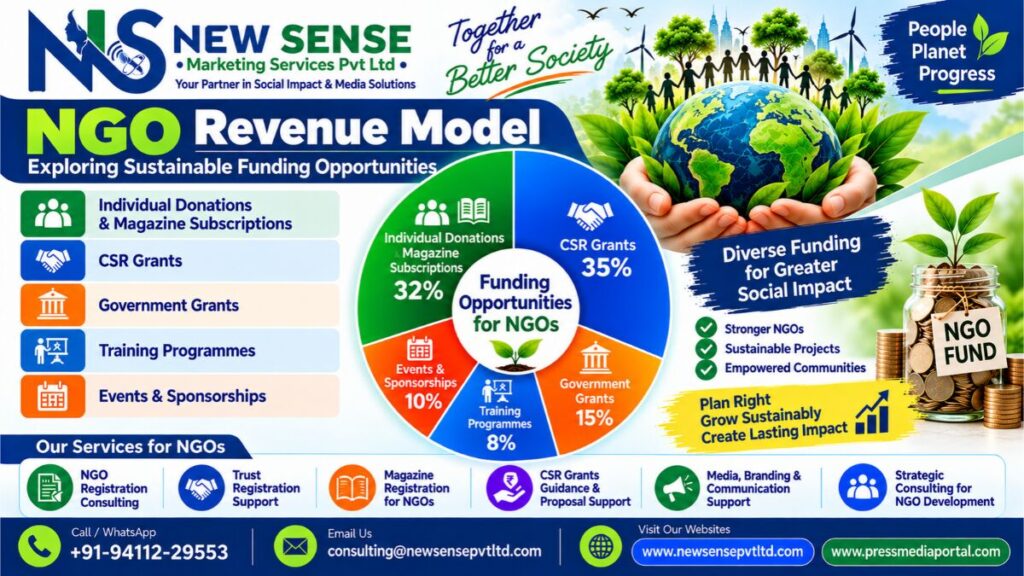
Potential funding and income sources
Individual donations: Contributions from supporters, members, and community donors.
CSR project funding: Project-based support from eligible corporate partners, subject to CSR rules and approval.
Government grants: Financial assistance under schemes for which the organization qualifies.
Membership contributions: Fees or contributions permitted by the organization’s governing documents and applicable law.
Training and workshops: Fees for relevant educational or skill-development programmes, where lawful and consistent with the organization’s objectives.
Publications and subscriptions: Income from magazines, newsletters, books, reports, and other permitted publications.
Events and campaigns: Sponsorships and participation fees for eligible seminars, exhibitions, conferences, and awareness programmes.
Institutional partnerships: Collaborative projects with educational institutions, foundations, and other organizations.
Table 3: NGO revenue model and planning considerations
| Funding source | Possible application | Key consideration |
| Individual donations | Community projects and general charitable work | Donor records and applicable tax rules |
| CSR grants | Approved projects aligned with CSR priorities | Eligibility, CSR-1 where required, and reporting |
| Government grants | Eligible programmes and schemes | Scheme-specific criteria and deadlines |
| Membership contributions | Organizational activities | Governing documents and accounting |
| Magazine subscriptions | Publication expenses and development | Publishing compliance and realistic demand |
| Training programmes | Skill development and awareness | Mission alignment and lawful fee collection |
| Events and sponsorships | Campaigns and public engagement | Clear agreements and transparent accounting |
Build a sustainable financial plan
An NGO should prepare an annual budget, identify recurring expenses, estimate realistic income, and maintain reliable accounts. It should also separate restricted project funds from other funds and use money only for authorized purposes.
Where applicable, organizations should seek professional advice on tax treatment, GST, foreign contributions, and other regulatory requirements. Foreign donations may trigger obligations under the Foreign Contribution (Regulation) Act, 2010, and the organization must not accept foreign contributions without the required legal authorization.
A balanced revenue model can help an NGO strengthen its operations while maintaining transparency, public confidence, and a clear social purpose.
11. How New Sense Marketing Services Pvt Ltd Supports NGOs
New Sense Marketing Services Pvt Ltd provides consulting support related to NGO services, media consulting, and magazine registration. Organizations should select services according to their specific needs and verify the scope of work before engaging a consultant.
A. Magazine registration consulting for NGOs
NGOs planning to launch a magazine or periodical can seek assistance with understanding the registration process, preparing the required application information, reviewing publication details, and identifying documentation requirements.
The proposed title, publication language, periodicity, ownership information, and other details should be reviewed before submission. The final decision rests with the competent authority, and registration cannot be guaranteed by a consultant.
B. NGO registration consulting services
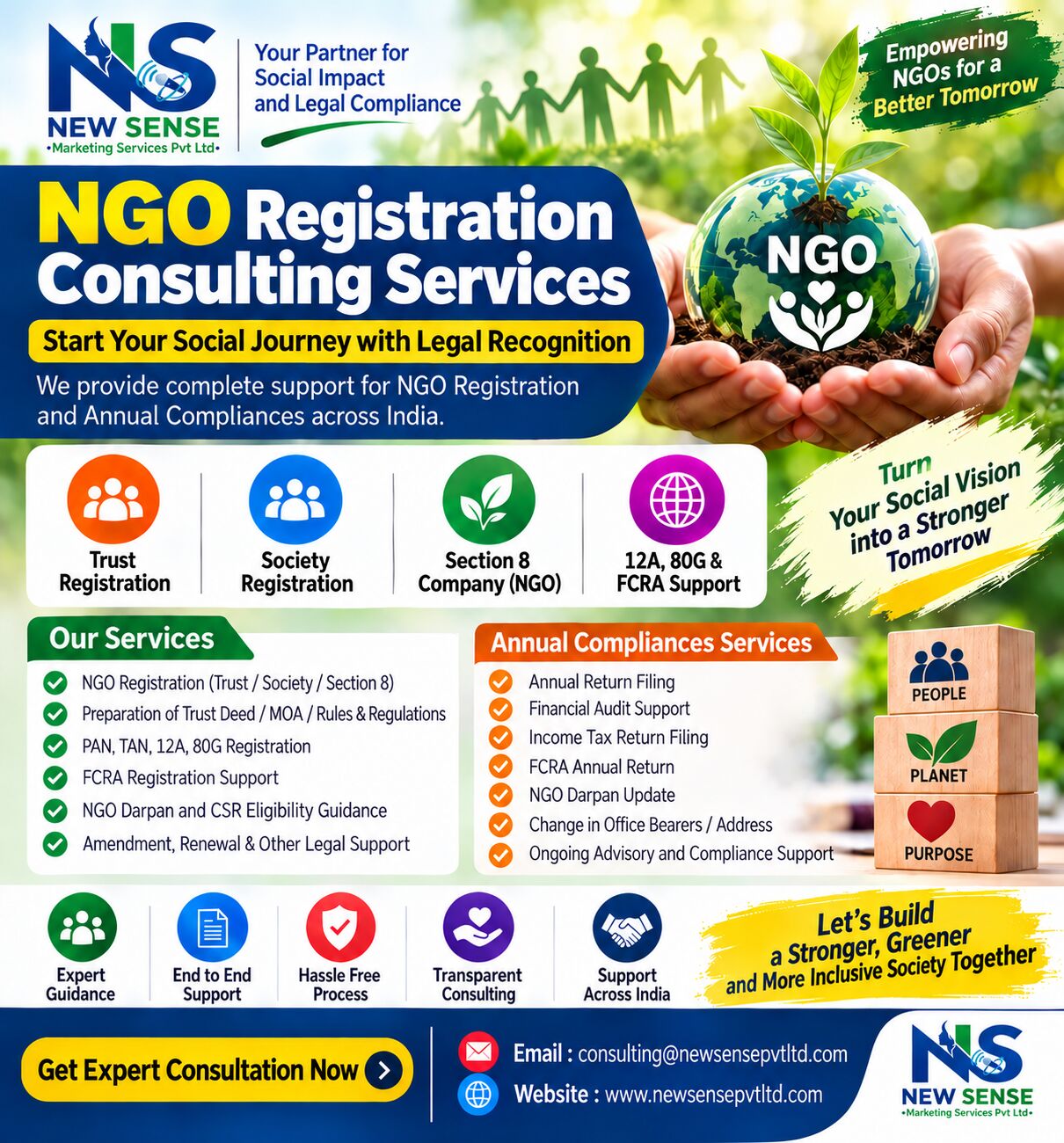
New Sense Marketing Services Pvt Ltd can be contacted to discuss consulting requirements relating to NGO registration and trust registration. Depending on the selected service and applicable legal process, support may include guidance on the appropriate registration structure, document preparation, application procedures, and compliance considerations.
Founders should confirm the exact deliverables, professional responsibilities, government fees, and any additional charges before proceeding.
C. Media and communication support
NGOs can use suitable media platforms to improve public awareness of their social work. A well-prepared article, newsletter, magazine, project report, or awareness campaign can help communicate an organization’s objectives and documented results.
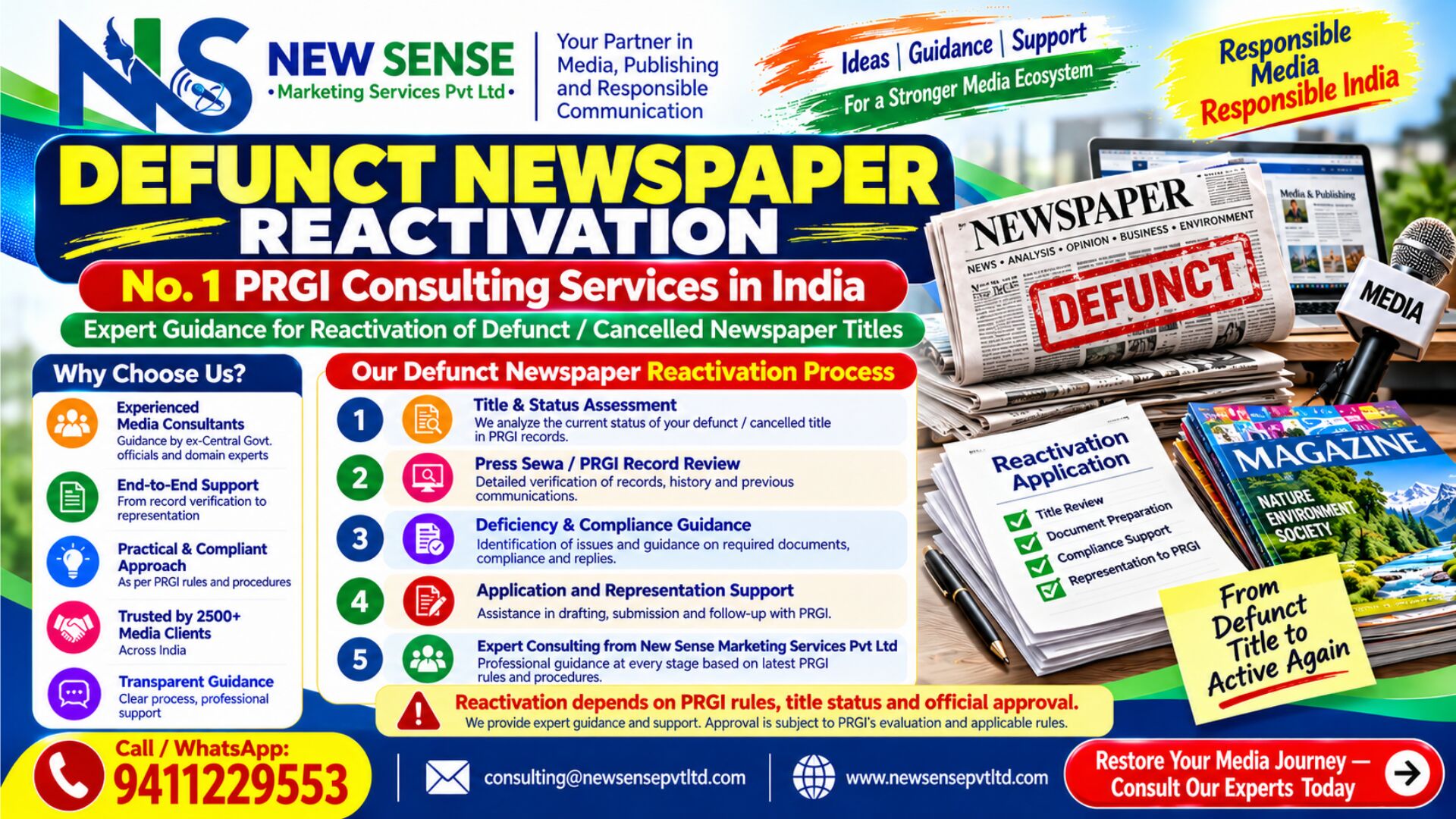
New Sense Marketing Services Pvt Ltd also works in the media consulting field. NGOs can enquire about relevant publication and communication services according to their requirements.
D. Social work promotion and public awareness
World NGO Day 27 February offers an opportunity for NGOs to communicate verified achievements, announce upcoming initiatives, recognize volunteers, and share community development stories.
A practical communication plan may include a special article, project photographs with appropriate consent, an annual report, a media feature, and an informative website page.
Publicity should accurately represent the organization’s activities. NGOs should never exaggerate beneficiary numbers, claim funding that has not been received, or publish personal information without appropriate permission.
Contact New Sense Marketing Services Pvt Ltd
Company: New Sense Marketing Services Pvt Ltd
Mobile / WhatsApp: +91-94112-29553
Email: consulting@newsensepvtltd.com
Company Website: https://www.newsensepvtltd.com/ & www.pressmediaportal.com
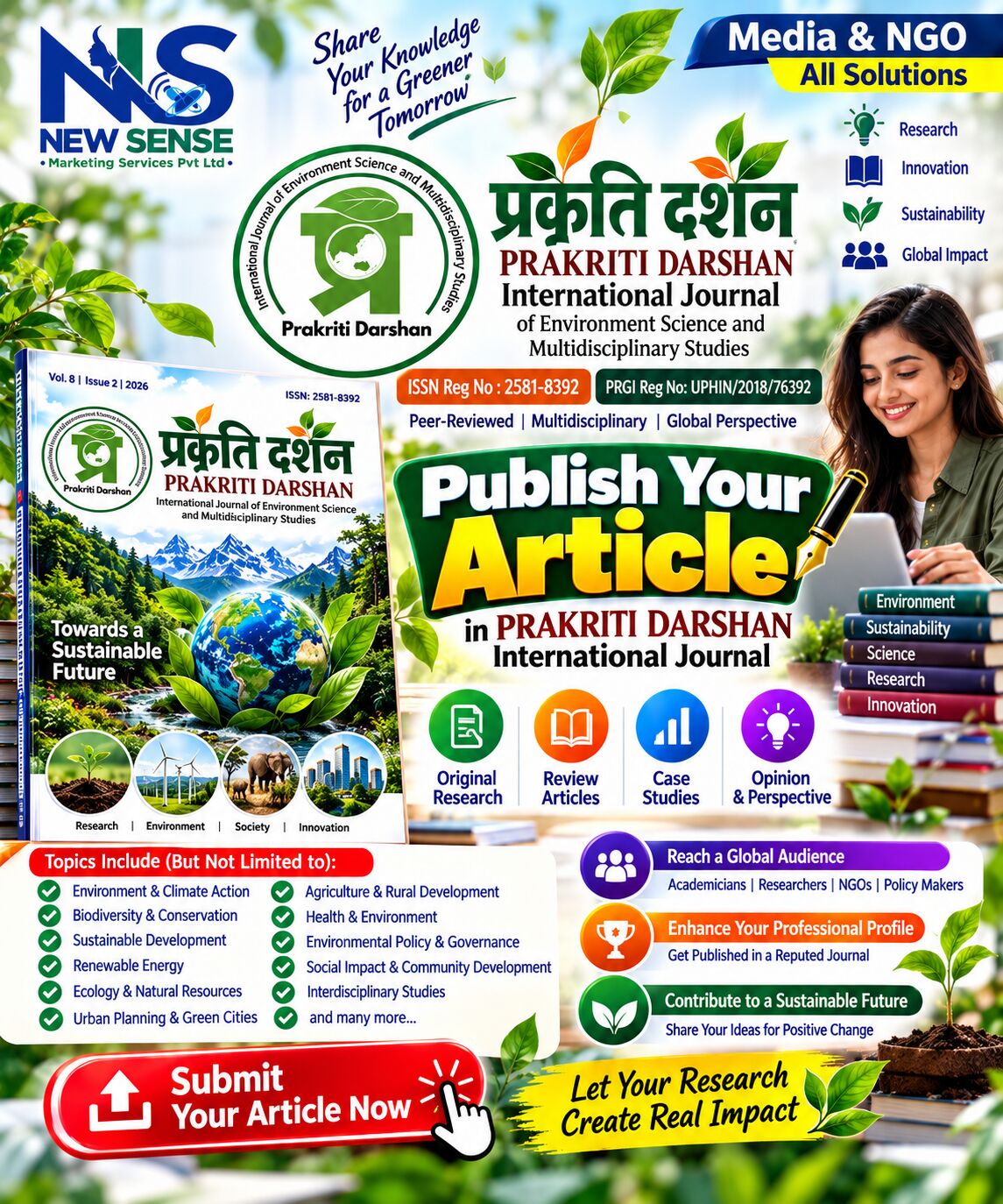
Prakriti Darshan Website: https://prakritidarshan.com/ ( Company Product /Magazine )
For information about NGO registration consulting, trust registration, magazine registration, and relevant media services, contact the company directly. Ask for the applicable service details, document checklist, timelines, fees, and scope of work before making a decision.
12. Frequently Asked Questions About World NGO Day and NGO Services
1. What is World NGO Day?
World NGO Day is an annual observance that recognizes the contributions of non-governmental organizations, non-profit institutions, employees, volunteers, and other people working for public benefit.
2. When is World NGO Day celebrated?
World NGO Day is celebrated every year on 27 February.
3. What is the main objective of World NGO Day?
Its main objective is to recognize NGO contributions, increase public awareness, encourage collaboration, and highlight the importance of civil society in addressing social challenges.
4. How can an NGO celebrate World NGO Day 27 February?
An NGO can organize awareness programmes, publish an impact report, recognize volunteers, conduct community activities, share verified success stories, or explore suitable partnerships.
5. How can I register an NGO in India?
Common options include a public charitable trust, a society, and a Section 8 company. The process depends on the selected structure, relevant authority, state requirements, and applicable law. New Sense Marketing Services Pvt Ltd www.newsensepvtltd.com & www.pressmediaportal.com WhatsApp 9411229553 Email: consulting@newsensepvtltd.com
6. What is the difference between NGO registration and trust registration?
NGO is a broad term for a non-governmental or non-profit organization. Trust registration is one possible legal route for establishing an organization for charitable or other permitted purposes.
7. Which documents are generally required for NGO registration?
Requirements vary by structure and jurisdiction. Common documents may include identity and address proofs, photographs, office-address documents, governing documents, and details of founders, trustees, members, or directors.
8. Can a newly registered NGO receive CSR grants?
A newly registered NGO may not meet every CSR implementing agency category. Eligibility depends on the applicable CSR rules, legal structure, tax-related registrations, track record where required, CSR-1 requirements, and the proposed project.
9. What is CSR-1 registration?
Form CSR-1 is used for registration of eligible entities intending to undertake CSR activities as implementing agencies under the applicable Companies (CSR Policy) Rules.
10. Can an NGO receive 80G benefits immediately after registration?
No. NGO registration alone does not automatically provide 80G approval. The organization must satisfy the relevant income-tax requirements and obtain approval where applicable.
11. What is animal NGO registration?
It generally means establishing an appropriate legal entity, such as a trust, society, or Section 8 company, with animal welfare objectives and completing the applicable registration and activity-specific compliance requirements.
12. Can an NGO publish its own magazine?
An NGO may explore publishing a magazine or periodical, subject to the applicable publishing law and registration requirements. NGO registration alone does not automatically register the publication.
13. Why is magazine registration useful for NGOs?
A magazine can help an NGO share project reports, social awareness articles, research, interviews, educational material, and documented achievements with a wider audience.
14. Can an NGO earn income through magazine subscriptions and advertising?
Potentially, yes, subject to the organization’s legal structure, governing documents, applicable tax and publishing rules, donor restrictions, and proper accounting.
15. What are the common revenue models for NGOs?
Possible sources include individual donations, eligible CSR grants, government schemes, membership contributions, subscriptions, permitted training fees, event sponsorships, and institutional partnerships.
16. How can New Sense Marketing Services Pvt Ltd help with magazine registration?
The company can be contacted for information about magazine registration consulting, publication documentation, application procedures, and related media services. The exact scope, fees, and deliverables should be confirmed directly.
17. Does New Sense Marketing Services Pvt Ltd provide NGO registration consulting?
The company can be contacted to discuss NGO registration and trust registration consulting requirements, including guidance on the registration process and relevant documentation.
18. Can a consultant guarantee NGO registration or CSR funding?
No responsible consultant can guarantee an authority’s registration decision or a corporate donor’s funding decision. Both depend on the applicable requirements, submitted information, eligibility, and independent review.
19. How can an NGO contact New Sense Marketing Services Pvt Ltd?
You can contact the company on mobile or WhatsApp at +91-94112-29553, email consulting@newsensepvtltd.com, or visit https://www.newsensepvtltd.com/.
20. Where can NGOs learn about Prakriti Darshan?
Visit https://prakritidarshan.com/ for information about Prakriti Darshan, its magazine, and related publication content.
13. Conclusion: Make World NGO Day a Step Towards Sustainable Social Impact
World NGO Day, celebrated every year on 27 February, reminds us of the important role that non-governmental organizations play in education, healthcare, environmental protection, animal welfare, community development, and social awareness.
For NGOs in India, the occasion can be used to review organizational registration, strengthen financial transparency, develop suitable CSR project proposals, improve public communication, and plan sustainable activities.
Magazine registration can provide a platform for documenting social work and sharing verified achievements, while an appropriate revenue model can help support long-term organizational activities. However, successful NGO development requires more than registration or publicity. It depends on genuine community service, responsible governance, proper accounting, legal compliance, and measurable results.
Organizations planning NGO registration, trust registration, animal welfare projects, CSR proposals, or magazine registration can seek suitable professional guidance according to their requirements.
This World NGO Day on 27 February, let us recognize the people behind social change and encourage transparent, responsible, and sustainable community development.
For relevant NGO registration consulting, trust registration, and magazine registration services, contact New Sense Marketing Services Pvt Ltd through its official website, email, or mobile number listed above.
14. Disclaimer
This article is intended for general information and educational purposes. It does not constitute legal, financial, tax, or professional advice. NGO registration, trust registration, magazine registration, tax exemptions, CSR implementing agency eligibility, and animal welfare permissions depend on applicable laws, rules, documentation, and individual circumstances.
Readers should verify current requirements through the relevant government authorities and seek qualified professional advice where necessary. CSR grants, government grants, tax benefits, registration approvals, publication acceptance, and revenue are not guaranteed.
References to consulting services are informational and do not constitute a guarantee of results. Readers should confirm the current scope of services, fees, timelines, and terms directly with the service provider before engaging any consultant.
Contact New Sense Marketing Services Pvt Ltd
- Website: https://newsensepvtltd.com/
- Contact / WhatsApp: 94112 29553
- Email : consulting@newsensepvtltd.com
- Our Magazine: https://prakritidarshan.com/
- Our Newspaper: https://prakritidarshannews.com/
- Our International Journal (ISSN): https://prakritidarshanjournal.com/index.php/pdijemds/index