







Modern news site design is no longer just about creating an attractive website and publishing daily news articles. A successful digital news platform should provide a complete working environment where journalists can register online, manage their profiles, submit news stories, track publication status, and access opportunities to earn through their contributions. At the same time, website owners need complete control over content, editorial decisions, subscriptions, monetization, and daily operations.
A well-planned news site design can bring all these activities together in one organized system. Instead of managing every journalist through phone calls, emails, and separate messaging groups, publishers can offer a centralized platform where journalists work through their own dashboards and administrators manage the entire operation from the backend.
This approach is especially useful for newspaper publishers, digital media companies, regional news portals, independent media organizations, and entrepreneurs who want to build a scalable online news business.
With the right news site design, you can allow journalists to join your platform through a frontend registration form, submit news reports for approval, access subscription plans, and participate in a clearly defined revenue model. Automation can handle routine activities such as registration notifications, submission tracking, subscription reminders, and publication updates.
The result is a more professional, organized, and scalable news publishing business that supports both the editorial team and the journalists who contribute to it.
Table of Contents
- What Is Modern News Site Design?
- Why Traditional News Websites Need an Upgrade
- Frontend Journalist Registration and Onboarding
- Personal Journalist Dashboard and Account Management
- News Submission with Admin and Editor Approval
- Journalist Subscription Plans and Membership Features
- Become a Journalist: A Powerful Growth Feature
- Revenue Models for a Digital News Platform
- Automation in News Site Design
- Complete Administrative Control and Editorial Management
- SEO-Friendly News Site Design for Better Visibility
- Security, Performance, and Mobile Responsiveness
- How to Build a Scalable News Publishing Business
- Benefits of an Automated Journalist Onboarding System
- Conclusion
- Frequently Asked Questions (10 FAQs)
1. What Is Modern News Site Design?
Modern news site design combines website appearance, content publishing, journalist management, subscription services, and business automation into one integrated digital platform.
A traditional news website generally allows administrators or a limited editorial team to publish articles. A more advanced platform can also invite external journalists, freelance reporters, local correspondents, and aspiring writers to register and contribute content through a structured process.
The website becomes more than a place to read news. It becomes a digital newsroom where different users have different responsibilities and access permissions.
Essential Features of News Site Design
A professional news site design should include:
- A responsive homepage featuring the latest and most important news.
- Category-wise news sections for politics, business, education, sports, entertainment, and other topics.
- Frontend registration for journalists and contributors.
- Individual journalist dashboards.
- News submission forms with image and document uploads.
- Admin and editor approval workflows.
- Journalist membership and subscription options.
- Revenue tracking and monetization features.
- Automated email notifications and account updates.
- Search engine optimization and social sharing.
- User roles, security controls, and activity management.
When these features work together, publishers can manage a growing network of journalists without making every activity dependent on manual intervention.
2. Why Traditional News Websites Need an Upgrade
Many publishers begin with a simple website where administrators manually collect news from contributors and publish it after editing. This may work for a small team, but it becomes difficult as the number of journalists and submissions increases.
For example, a publisher working with 100 journalists may receive news through email, messaging applications, phone calls, and documents. Tracking each submission, correcting missing information, communicating editorial decisions, and managing payments can consume considerable time.
A modern news site design addresses these challenges by bringing the entire process into one system.
Common Challenges for Publishers
Unorganized journalist management: Without a registration system, maintaining accurate journalist details and contact information becomes difficult.
Time-consuming communication: Publishers repeatedly answer questions about registration, submission status, and publication updates.
Limited editorial control: News received through informal channels may lack the necessary details, photographs, sources, or supporting documents.
Unclear earning opportunities: Journalists may not understand how they can participate in revenue-generating activities.
Difficult expansion: Adding more journalists increases administrative work when the website does not have a structured workflow.
A better news site design provides a defined process for every activity, from registration to publication. This makes the organization easier to manage and creates a more professional experience for contributors.
3. Frontend Journalist Registration and Onboarding
Frontend journalist registration is one of the most important features of a modern digital newsroom.
Instead of asking every applicant to contact the website administrator, the platform can provide a dedicated registration page where interested individuals submit their details and create an account.
A properly developed news site design should make this process simple enough for new users to complete without technical assistance.
What Should the Registration Form Include?
Depending on the organization’s requirements, the journalist registration form may include:
- Full name and profile photograph.
- Email address and mobile number.
- City, district, and state.
- Preferred reporting categories.
- Journalism experience or professional background.
- Organization or publication affiliation, where applicable.
- Identification or verification documents, if required.
- Selected membership or subscription plan.
- Acceptance of website policies and contributor guidelines.
After submitting the form, applicants can receive an automated confirmation. The administrator can review their details and approve, reject, or request additional information.
For organizations that require verification, the system should distinguish between a registered user and an approved journalist.
Automated Onboarding Workflow
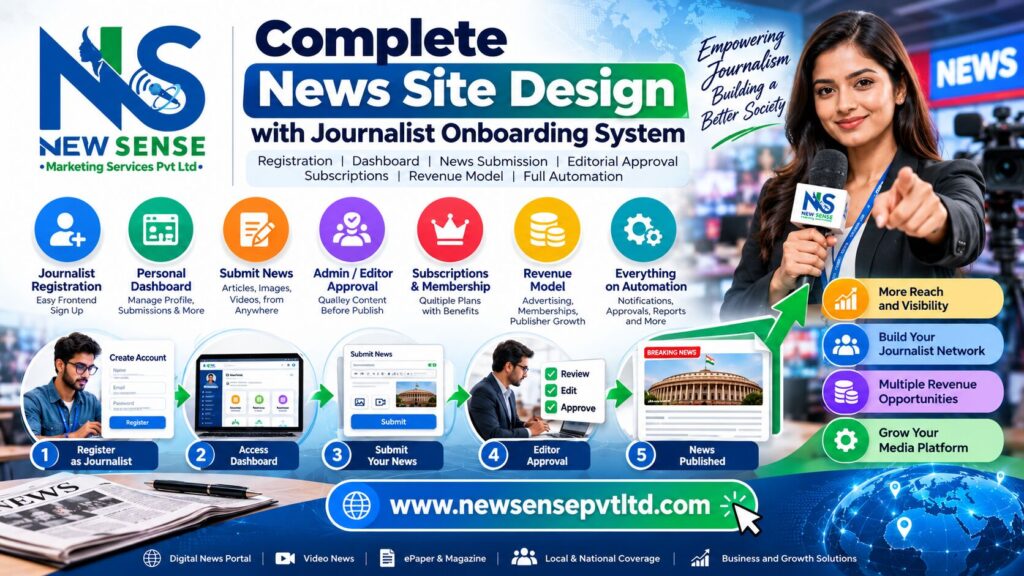
An effective news site design can automate the following process:
- The applicant opens the journalist registration page.
- The applicant completes the form and creates an account.
- The system sends a registration confirmation.
- The administrator receives a new application notification.
- The administrator verifies the application and approves the account.
- The journalist receives access to the appropriate dashboard.
- The journalist can complete their profile and explore available features.
The platform can also support different registration categories, such as freelance journalist, district correspondent, guest contributor, or editor, provided the organization defines the relevant permissions.
This structured onboarding experience helps publishers build a wider contributor network while keeping registration and approval under administrative control.
4. Personal Journalist Dashboard and Account Management
A personal dashboard gives each journalist a dedicated space to manage their activities. It reduces confusion and allows contributors to access important information without contacting the administrator for every update.
In a feature-rich news site design, the journalist dashboard should be easy to use on both desktop computers and mobile devices.
Important Journalist Dashboard Features
Profile management: Journalists can update permitted profile information, add a photograph, and manage their professional details.
Submit news: Contributors can access a form to submit reports, headlines, article content, photographs, captions, and supporting documents.
My submissions: Journalists can view previously submitted stories and check their current status.
Editorial feedback: Editors can provide correction requests, explain why a story needs revision, or request additional information.
Published articles: Journalists can access a list of their approved and published contributions.
Subscription management: Users can view their current plan, validity, payment history, and renewal options.
Notifications: The dashboard can display important updates regarding submissions, membership status, and editorial decisions.
Revenue information: Where a defined earning program exists, eligible journalists may view their qualifying activity, estimated earnings, approved amounts, and payment status.
A professional news site design should also display clear submission statuses, such as Draft, Submitted, Under Review, Changes Required, Approved, Published, and Rejected.
These labels help journalists understand exactly what is happening with their work.
The dashboard should only display information that the logged-in user is authorized to access. Journalists must not be able to view another contributor’s private submissions, earnings, or account information.
5. News Submission with Admin and Editor Approval
Content quality is central to a trustworthy news website. Allowing journalists to submit stories should not mean that every submission automatically becomes public.
A reliable news site design should include a formal editorial review process before publication.
How the News Submission Process Works
Step 1: Prepare the story
The journalist writes a report using the frontend submission form. The form can include the headline, article body, category, location, featured image, captions, and source information.
Step 2: Submit for review
The journalist submits the report. The system records the submission and changes its status to Under Review.
Step 3: Notify the editorial team
An automated notification informs the assigned editor or administrator that new content requires attention.
Step 4: Review and edit
The editor checks the facts, writing quality, originality, image permissions, relevance, and compliance with editorial policies.
Step 5: Request changes or approve
If the story requires corrections, the editor can return it to the journalist with feedback. Otherwise, the editor can approve it for publication.
Step 6: Publish the article
The authorized editor or administrator publishes the approved article, either immediately or at a scheduled time.
Step 7: Notify the journalist
The system can automatically notify the contributor when the article is published or when further action is required.
Why Editorial Approval Matters
A strong news site design protects the publisher’s editorial standards while providing journalists with an organized submission process.
Approval controls help reduce the risk of misleading information, duplicate content, inappropriate images, unverified allegations, and poorly prepared reports reaching the public.
Publishers should also maintain a record of editorial decisions and restrict publication permissions to authorized users. Automation can make the process faster, but editorial judgment should remain with qualified human reviewers.
6. Journalist Subscription Plans and Membership Features
A journalist onboarding system can support free registration as well as paid subscription plans. The right structure depends on the publisher’s business model and the services offered to contributors.
An effective news site design can connect registration, membership selection, payments, account activation, and subscription renewal within one workflow.
Possible Subscription Plans
Free Contributor Plan
This plan can allow users to create an account, maintain a profile, and submit a limited number of stories. Editors review submissions under the same editorial standards used for other contributors.
Standard Journalist Plan
A paid plan may include additional submission capacity, enhanced dashboard tools, profile visibility, contributor resources, and access to selected training materials.
Professional Journalist Plan
A higher-tier membership could offer expanded publishing tools, detailed activity reports, priority administrative support, and access to approved promotional opportunities.
Organization or Media Team Plan
Publishers, reporting agencies, or media organizations may benefit from accounts that support multiple contributors, centralized billing, and team-level administration.
These are illustrative options, not mandatory features. Publishers should define the benefits and prices according to their audience, operating costs, and market demand.
Automated Subscription Management
A complete news site design can support payment confirmation, subscription activation, expiry notifications, renewal reminders, and account status updates.
If a payment fails or a subscription expires, the system can notify the user and apply the restrictions defined by the plan.
Importantly, subscription payments should not automatically guarantee publication. Editorial approval must remain independent of a journalist’s payment status.
Publishers should clearly explain which services are included in each plan, whether subscriptions renew automatically, and how cancellations and refunds are handled.
7. Become a Journalist: A Powerful Growth Feature
A dedicated Become a Journalist feature can help a news website attract new contributors from different locations and professional backgrounds.
Many people are interested in reporting local events, education updates, civic issues, community developments, business news, and other subjects relevant to their regions. A clear onboarding page can explain how they can participate in the platform.
What Should the Become a Journalist Page Offer?
The page should explain:
- Who can apply to become a contributor.
- What information is required for registration.
- How journalist verification works.
- How news stories should be submitted.
- How the editorial review process operates.
- Which membership plans are available.
- What earning opportunities, if any, are offered.
- What rules and responsibilities contributors must follow.
The registration process should be easy to find from the website’s main navigation, homepage, and relevant landing pages.
A well-designed news site design can connect this page directly to the registration form and onboarding workflow, allowing visitors to move from interest to account creation without unnecessary steps.
Build a Network of Local Contributors
Publishers can use the feature to invite journalists from different cities, districts, and states. Over time, the platform may develop into a broader contributor network covering subjects that a small editorial team cannot easily monitor alone.
However, expansion should be supported by verification, clear reporting guidelines, and appropriate editorial oversight.
The objective is not simply to collect registrations. It is to develop an active community of contributors who understand the platform, submit useful reports, and work within its editorial standards.
8. Revenue Models for a Digital News Platform
A scalable news site design should support sustainable business opportunities for the publisher while providing transparent terms for journalists.
Revenue should come from clearly defined services, audience value, and legitimate commercial activities rather than promises of guaranteed earnings.
1. Display Advertising
The publisher can generate income through advertising placements on news pages, category pages, and other suitable sections of the website.
Advertising performance depends on audience size, engagement, advertiser demand, and placement quality.
2. Sponsored Content
Businesses may pay for sponsored articles or promotional features. Such content should be clearly identified as sponsored and reviewed according to the platform’s policies.
3. Paid Memberships
Readers can be offered premium subscriptions for additional reports, exclusive articles, special editions, or other valuable content.
4. Journalist Memberships
Contributor plans may generate revenue when they provide genuine services such as training, publishing tools, or enhanced account functionality. Payment must not be represented as a guarantee of editorial acceptance, official press credentials, or employment.
5. Newsletter and Digital Publication Revenue
A publisher may monetize newsletters, digital magazines, special reports, or premium content collections through subscriptions and sponsorships.
6. Events and Training
The platform can organize journalism workshops, reporting training, media literacy programs, or professional events where appropriate.
7. Transparent Journalist Revenue Sharing
Where suitable, publishers can introduce a revenue-sharing program for eligible contributors.
For example, a written policy might define payments for qualifying commissioned articles, approved assignments, or a documented share of advertising revenue. The platform should explain eligibility, calculation methods, reporting periods, deductions, and payment schedules.
A news site design can support this model with contribution records, revenue statements, payment statuses, and downloadable reports.
The revenue model should be financially realistic and transparent. Publishers must avoid guaranteeing income or implying that purchasing a membership will ensure earnings.
9. Automation in News Site Design
Automation is one of the most valuable components of a modern news site design because it reduces repetitive work and creates consistent processes.
The aim is to automate routine administration while keeping sensitive decisions under appropriate human control.
Tasks That Can Be Automated
Registration notifications: Send confirmation messages to applicants and notify administrators about new registrations.
Account activation: Grant the correct dashboard access after the required approval or payment conditions are met.
Submission tracking: Automatically record submission dates and update workflow statuses when authorized users take action.
Editorial alerts: Notify editors when new articles arrive or when a journalist resubmits corrected content.
Publication updates: Inform journalists when their articles are approved, rejected, returned for revision, or published.
Subscription reminders: Send renewal and expiry reminders according to the selected plan.
Payment records: Record successful transactions and update membership status after verified payment confirmation.
Reporting: Generate periodic summaries of registrations, submissions, published articles, subscription activity, and eligible revenue.
Social media distribution: Approved articles can be sent to connected social media publishing tools, subject to platform permissions and publisher settings.
Backup and monitoring: Scheduled backups, system monitoring, and error alerts can help maintain operational continuity.
A properly configured news site design can connect these activities into one workflow, reducing manual effort and making the platform easier to operate as it grows.
Automation should include safeguards for failed payments, duplicate submissions, notification errors, and unauthorized changes. Sensitive actions such as publishing high-risk stories, approving payments, or changing user privileges should require appropriate permissions.
10. Complete Administrative Control and Editorial Management
Automation does not mean giving up control. In fact, a well-planned news site design gives the website owner more visibility over the entire operation.
The administrator should be able to manage users, editorial workflows, membership settings, and platform-wide policies from a centralized backend.
Essential Administrative Features
- Approve, suspend, or reject journalist accounts.
- Assign editor and administrator roles.
- Configure registration and verification requirements.
- Create and manage journalist subscription plans.
- Define submission limits and account permissions.
- Review, edit, approve, schedule, or reject news articles.
- Manage categories, tags, images, and featured stories.
- Monitor payments and subscription activity.
- Configure notification templates.
- View activity logs and operational reports.
- Manage advertising placements and monetization settings.
- Control access to sensitive account and financial information.
The publisher should be able to decide which activities are automated and which require manual approval.
For example, a subscription may activate automatically after a verified payment, while journalist verification requires administrator review. A submission can trigger an editorial notification automatically, while publication remains restricted to an authorized editor.
This balance allows the organization to operate efficiently without losing editorial independence or administrative oversight.
11. SEO-Friendly News Site Design for Better Visibility
Search engine optimization helps readers discover news articles through relevant searches. A website may have excellent content, but poor technical structure can make its pages harder to understand and navigate.
An SEO-friendly news site design should support both readers and search engines.
Important SEO Elements
Clean URLs: Use descriptive, readable URLs for articles and categories.
Proper headings: Organize stories with meaningful titles, headings, and subheadings.
Unique metadata: Provide appropriate page titles and meta descriptions.
Image optimization: Use relevant image filenames, descriptive alternative text, and suitable image dimensions.
Internal linking: Connect related reports, topic pages, and important news categories.
Mobile responsiveness: Ensure articles and navigation work properly on smartphones and tablets.
Structured data: Implement appropriate structured data where supported and applicable.
XML sitemaps: Help search engines discover eligible website pages.
News-specific optimization: Publishers who qualify can explore Google News requirements, news sitemaps, and relevant technical recommendations.
Fast loading: Optimize images, scripts, caching, and hosting configuration.
A strong news site design should also protect editorial quality. Allowing multiple journalists to submit content makes it particularly important to check for duplicated articles, copied material, inaccurate headlines, and unnecessary keyword repetition.
SEO should support useful journalism rather than replace it.
12. Security, Performance, and Mobile Responsiveness
A journalist platform manages personal information, user accounts, content submissions, and potentially financial records. Security must therefore be part of the original development plan.
A professional news site design should include secure login procedures, appropriate access permissions, spam prevention, regular updates, reliable backups, and protection against common web attacks.
Security Best Practices
- Use HTTPS across the website.
- Apply role-based permissions.
- Protect registration and submission forms against spam.
- Validate uploaded files and restrict unsafe file types.
- Use secure payment gateway integrations.
- Store passwords using established secure authentication methods.
- Keep audit logs for sensitive administrative actions.
- Restrict access to private documents and personal information.
- Maintain tested backups and a recovery plan.
- Follow applicable privacy and data protection requirements.
Performance matters just as much. Large images, excessive plugins, poorly optimized scripts, and overloaded hosting can make a news portal slow.
The news site design should be tested on mobile devices because many readers and contributors use smartphones as their primary means of accessing the internet.
Registration forms, article editors, dashboards, payment pages, and navigation menus must remain practical on smaller screens.
13. How to Build a Scalable News Publishing Business
Before building a journalist platform, publishers should define the business process they want the technology to support.
Starting with a clear workflow helps avoid unnecessary features, complicated dashboards, and expensive redevelopment.
Step 1: Define the Platform’s Purpose
Decide whether the website will operate as a newspaper, digital news portal, regional reporting network, specialist publication, or multi-contributor media platform.
Step 2: Identify User Roles
Define the permissions for visitors, registered journalists, verified contributors, editors, finance staff, and administrators.
Step 3: Map the Journalist Journey
Document the steps from registration to verification, submission, editorial review, publication, and any applicable revenue payment.
Step 4: Select the Technology
Choose a suitable website platform, content management system, or custom application based on budget, technical requirements, expected traffic, and long-term plans.
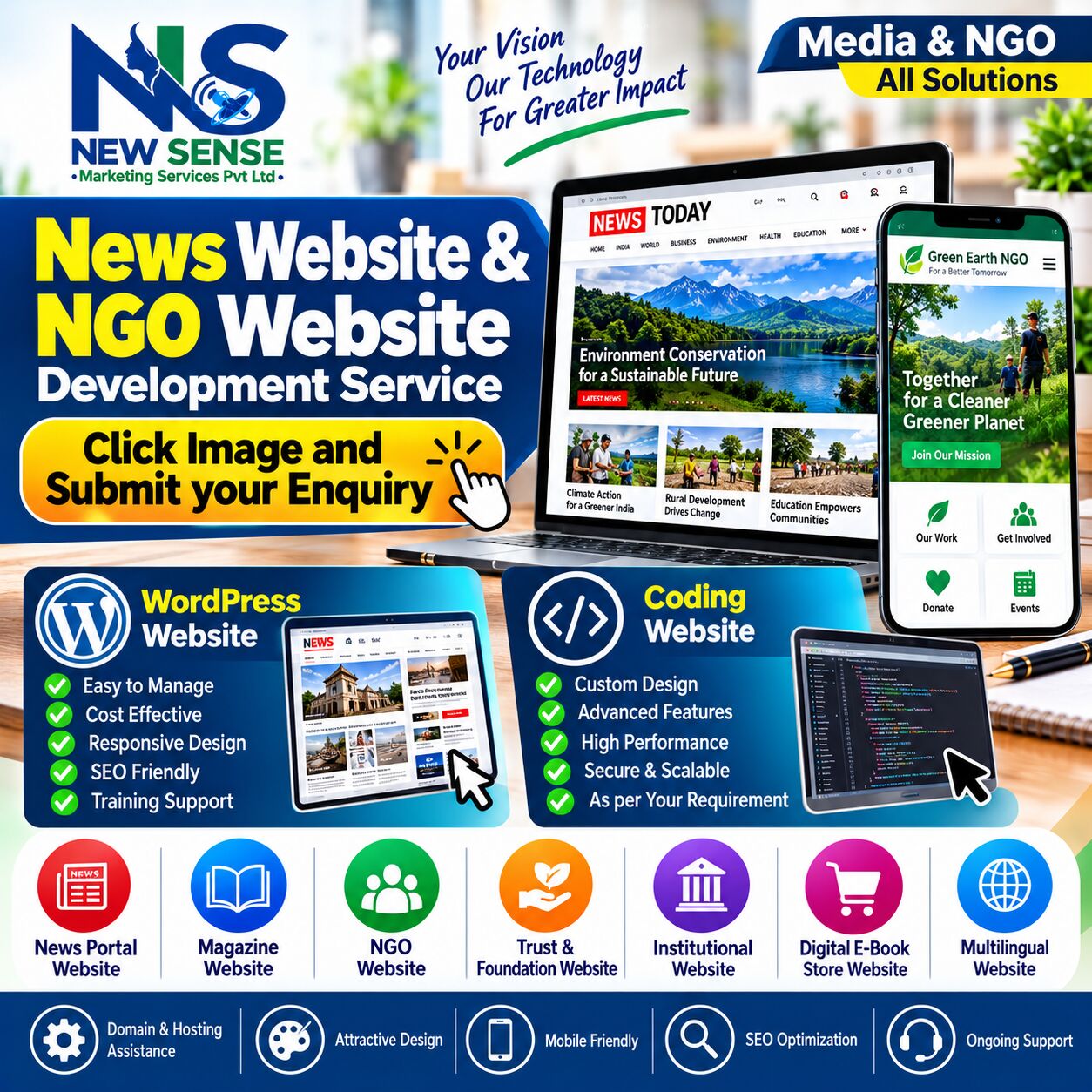
For a WordPress-based news site design, the implementation may combine a suitable theme, user registration tools, custom dashboard development, content submission functionality, membership features, payment integrations, and automation services.
The exact combination depends on the required workflow. Not every feature will be available in a standard theme or plugin, and custom development may be necessary.
Step 5: Build and Test the Workflow
Test registrations, account permissions, submissions, editorial decisions, payments, renewals, notifications, and mobile layouts before launching the platform.
Step 6: Launch with a Controlled Contributor Group
Begin with a manageable number of journalists. Collect feedback, refine the process, and resolve operational issues before inviting a larger network.
Step 7: Improve Through Data
Monitor submission quality, publication turnaround time, active contributors, reader engagement, subscription renewals, and revenue performance.
A scalable news site design should allow the publisher to improve operations as the business develops rather than forcing a complete rebuild whenever requirements change.
14. Benefits of an Automated Journalist Onboarding System
A well-developed news site design offers advantages for both publishers and contributors.
Benefits for Website Owners
- Centralized journalist registration and management.
- Reduced repetitive administrative work.
- Better editorial control over submitted content.
- Organized subscription and payment records.
- Easier expansion into new locations and categories.
- Improved visibility into publishing activity.
- More opportunities to develop sustainable revenue streams.
Benefits for Journalists
- Convenient online registration.
- Personal dashboards for managing activities.
- A clear process for submitting reports.
- Access to editorial feedback and publication updates.
- Easier subscription management.
- Transparent information about eligible earning opportunities.
- Access to a structured platform for contributing news.
Benefits for Readers
Readers benefit when publishers can organize reporting activity, maintain consistent editorial standards, and publish useful news in a timely manner.
A thoughtfully designed news site design connects these benefits through a common system. It makes the website more than a digital newspaper by creating an organized environment for content production, contributor management, and business operations.
Conclusion
Building a successful digital publication requires more than attractive pages and regular news updates. Publishers need a reliable system for managing journalists, collecting reports, maintaining editorial quality, handling subscriptions, and supporting sustainable revenue.
A modern news site design brings these functions together through frontend journalist registration, personal dashboards, structured news submissions, admin and editor approval, membership management, and automated notifications.
The addition of a Become a Journalist feature can help attract contributors from different regions, while a carefully designed revenue model can create commercial opportunities for the publisher and eligible journalists. Clear policies, fair payment terms, secure user accounts, and independent editorial decisions are essential to building trust.
Automation can reduce repetitive tasks, but the publisher must retain control over permissions, content quality, financial policies, and publication decisions.
Whether you are launching a new news portal or upgrading an existing newspaper website, the right news site design can help you build a more organized, professional, and scalable media business.
The best starting point is to define your journalist onboarding process, establish your editorial workflow, choose suitable technology, and test the complete system before expanding.
With the right planning, your website can become a central platform where journalists contribute, editors manage quality, readers discover valuable information, and the business develops new opportunities for long-term growth.
Frequently Asked Questions (FAQs)
1. What is news site design?
News site design is the planning and development of a digital news website, including its layout, categories, article pages, navigation, content management, performance, and user experience. Advanced solutions can also include journalist registration, dashboards, subscriptions, editorial approval, and monetization.
2. Can journalists register directly on a news website?
Yes. A website can include a frontend registration form that allows applicants to submit their information and create accounts without accessing the WordPress administration area. The publisher can review applications and approve accounts before granting full journalist privileges.
3. Can journalists get their own dashboards?
Yes. A custom journalist dashboard can allow users to manage profiles, submit news reports, track article status, view editorial feedback, manage subscriptions, and access eligible revenue information. The available features depend on the website’s configuration.
4. Can journalists submit news without publishing it immediately?
Yes. The submission workflow can send every report to an editor or administrator for review. The story remains unpublished until an authorized person approves and publishes it. Editors can also request corrections or reject unsuitable submissions.
5. Can a news website offer journalist subscription plans?
Yes. Publishers can create free and paid membership plans with clearly defined benefits. Depending on the system, subscriptions can be connected to payment gateways, account activation, renewal reminders, expiry handling, and membership records.
6. How does the Become a Journalist feature work?
A Become a Journalist page explains the platform’s contribution process and links visitors to the registration form. Applicants submit their information, complete any required verification, and receive access to the features permitted by their approved account.
7. How can a news website generate revenue?
Possible revenue sources include display advertising, sponsored content, reader subscriptions, digital publications, journalist membership services, training programs, and transparent revenue-sharing arrangements. The most suitable model depends on the audience, business strategy, and value offered.
8. Can the journalist onboarding system be automated?
Yes. Many routine activities can be automated, including registration confirmations, editor notifications, submission status updates, subscription reminders, verified payment records, and reports. Sensitive editorial decisions and important account permissions should remain under appropriate human control.
9. Can I build a journalist onboarding system with WordPress?
Yes. WordPress can support this type of platform through suitable themes, user management tools, submission forms, membership functionality, and custom development. The exact setup depends on the required dashboard features, editorial workflow, subscription rules, and revenue model.
10. What should I consider before choosing a news site design?
Consider your publishing goals, journalist registration process, dashboard requirements, editorial approval workflow, subscription model, payment integrations, SEO, security, mobile responsiveness, automation needs, and future growth. Select a solution that meets your current requirements and can be expanded as your contributor network grows.
Disclaimer
This article is intended for general information and educational purposes. It does not constitute legal, financial, tax, or professional advice. NGO registration, trust registration, magazine registration, tax exemptions, CSR implementing agency eligibility, and animal welfare permissions depend on applicable laws, rules, documentation, and individual circumstances.
Readers should verify current requirements through the relevant government authorities and seek qualified professional advice where necessary. CSR grants, government grants, tax benefits, registration approvals, publication acceptance, and revenue are not guaranteed.
References to consulting services are informational and do not constitute a guarantee of results. Readers should confirm the current scope of services, fees, timelines, and terms directly with the service provider before engaging any consultant.
Contact New Sense Marketing Services Pvt Ltd
- Website: https://newsensepvtltd.com/
- Contact / WhatsApp: 94112 29553
- Email : consulting@newsensepvtltd.com
- Our Magazine: https://prakritidarshan.com/
- Our Newspaper: https://prakritidarshannews.com/
- Our International Journal (ISSN): https://prakritidarshanjournal.com/index.php/pdijemds/index


News Site Design for Newspapers, News Site Design for Publishers, News Site Design for Magazines, News Site Design for epapers, News Site Design on Affordable Price, News Site Design with a Trusted Team, News Site Design Improve Google Ranking, News Site Design for Revenue Generation.